[ISW] 적국 협상 태스크포스 업데이트, 2025년 8월 13일

“`html

주요 내용

주요 내용:

  • 중국과 러시아는 이란의 지원을 받는 후티 반군에게 홍해 통과 안전을 보장받는 대가로, 또는 중동에서 서방의 이익을 약화시키기 위해 군사 장비를 제공하고 있을 수 있습니다.
  • 최근 우크라이나 정보 보고서에 따르면, 러시아는 북한의 핵무기 운반 체계를 지원하고 있습니다. 이는 러시아가 이란의 핵 프로그램을 직접적으로 돕는 것을 꺼리는 것과 대조됩니다. 이는 우크라이나 전쟁에서 러시아가 북한에 더 많이 의존하고 있음을 반영합니다. 또한, 핵무기 프로그램 지원 요청에 대한 러시아의 차별적인 접근 방식은 북한이 이미 핵무기를 보유하고 있는 반면, 이란의 핵무기 개발을 돕는 것은 훨씬 더 심각한 단계라는 사실을 반영하는 것으로 보입니다.
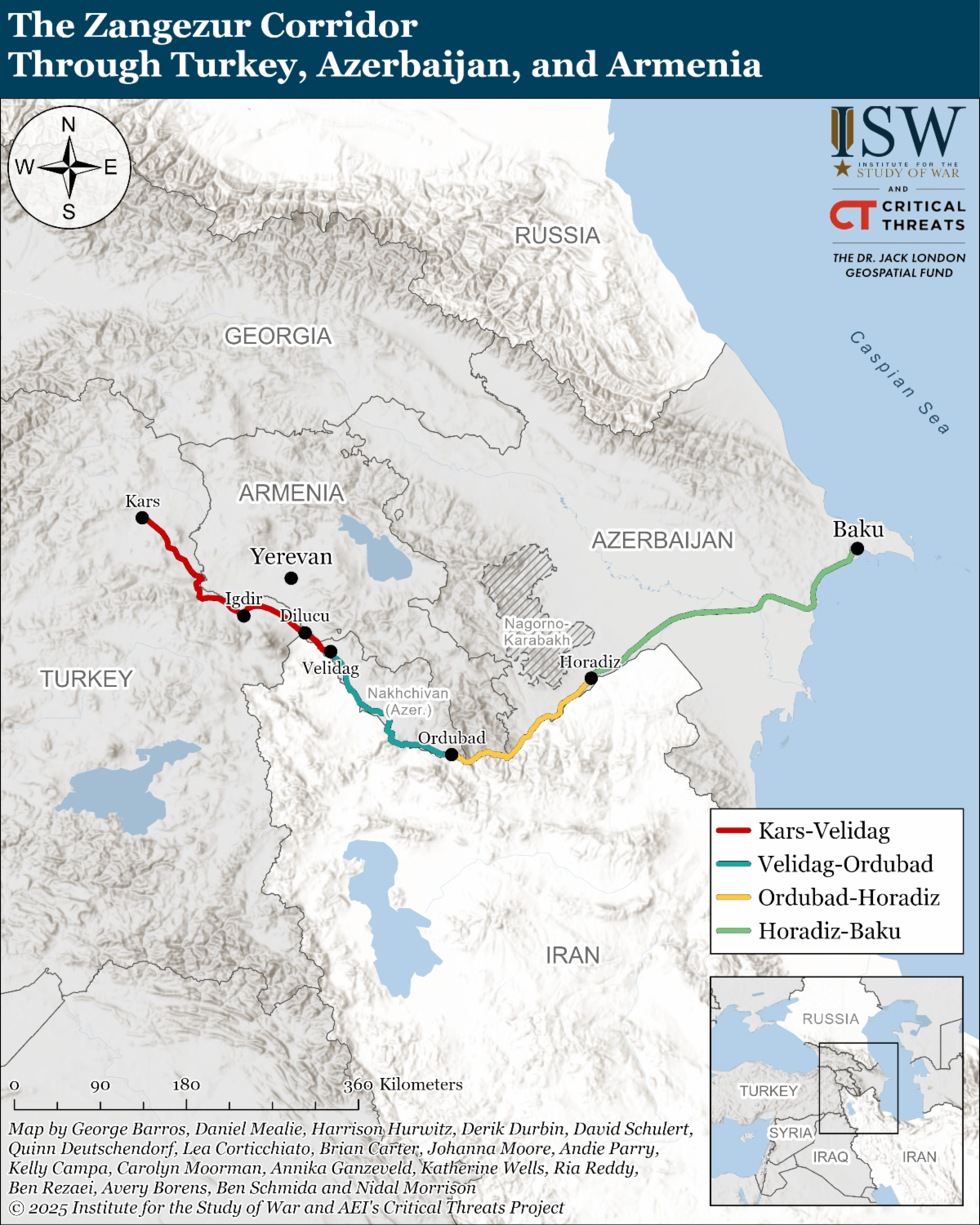
  • 미국 중재 하에 이루어진 아르메니아-아제르바이잔 평화 협정은 러시아와 이란을 남캅카스 지역에서 주변부로 밀어낼 가능성이 높습니다. 이는 러시아와 이란이 서방, 터키 또는 이스라엘의 영향력에 대항하기 위한 더 광범위한 전략의 일환으로 외교적 공조를 강화하는 결과를 낳을 수 있습니다.

분류:

지정학적 분석, 국제 관계, 군사 안보

관련 주요 국가:

  1. 러시아
  2. 중국
  3. 이란

향후 전망:

러시아와 중국은 서방의 영향력에 대항하기 위해 외교적 협력을 강화하고, 이란을 포함한 다른 국가들과의 관계를 심화시킬 것으로 예상됩니다. 특히 홍해에서의 지정학적 긴장이 고조될 가능성이 있으며, 북한의 핵무기 프로그램 관련 지원은 러시아의 우크라이나 전쟁 수행 능력에 중요한 영향을 미칠 수 있습니다. 또한, 아르메니아-아제르바이잔 평화 협정으로 인해 남캅카스 지역의 세력 구도가 변화하면서, 이 지역에서의 경쟁이 더욱 치열해질 수 있습니다.

“`

[원문]

The PRC and Russia may be providing the Iranian-backed Houthis with military equipment in exchange for safe passage through the Red Sea and as a way to undermine Western interests in the Middle East.

August 13, 2025

Information Cutoff: August 11

Kelly Campa and Daniel Shats, with Karolina Hird and Frederick W. Kagan

TOPLINES

The PRC and Russia may be providing the Iranian-backed Houthis with military equipment in exchange for safe passage through the Red Sea. Anti-Houthi Yemeni media reported on August 6 that Yemeni “counterterrorism forces” intercepted a “major shipment” of military equipment from the PRC bound for Houthi recipients at the Port of Aden. The shipment reportedly contained drones, radio equipment, advanced control units, and weapons parts. The ship had rerouted from the Houthi-controlled port of al Hudaydah following Israeli airstrikes on July 21. The shipment is the latest of several batches of PRC-origin equipment that Yemeni authorities have intercepted en route to the Houthis. Past shipments have included hydrogen fuel cells, drone propellers, and other components. A PRC firm also provided the Houthis with satellite intelligence. Russia has also transferred aid to the Houthis, though Iran is the group’s primary backer. US media and government officials have reported that Russia-based entities have transferred millions of dollars of weapons, dual-use components, and other commodities to the Houthis as of April 2025 and that Russia has also provided the Houthis with targeting intelligence. It is unclear the extent to which this aid has been directed by the PRC and Russian governments, however.

PRC and Russian aid for the Houthis may be part of an agreement to secure safe passage for Russian and PRC ships through the Red Sea and a way to undermine US and Western interests in the Middle East. Bloomberg reported in March 2024 that PRC and Russian diplomats had reached an agreement with the Houthis in Oman to ensure that the Houthis would not target their ships. The Houthis have attacked commercial vessels from various countries in the Red Sea since October 2023, forcing most Western shipping companies to take a much longer route around Africa instead, which has driven up shipping costs. The New York Times reported on August 10 that 14 PRC car carrying ships in July, and a similar number in June, safely transited the Red Sea en route to Europe, despite the Houthis sinking two other cargo ships in early July. The report said that continuing shipments through the Red Sea and Suez Canal saves PRC automakers hundreds of dollars per car compared to Japanese, Korean, and European automakers, which have had to redirect shipments around the southern tip of Africa. Some PRC ships, including those belonging to state-owned shipping giant COSCO, are still avoiding the Red Sea, however.

KEY TAKEAWAYS

  • The PRC and Russia may be providing the Iranian-backed Houthis with military equipment in exchange for safe passage through the Red Sea and as a way to undermine Western interests in the Middle East.

  • Recent Ukrainian intelligence reports that Russia is supporting North Korea’s nuclear weapons delivery systems contrasts with Russia’s continued unwillingness to help Iran’s nuclear program directly, likely reflecting Russia’s greater reliance on North Korea in its war in Ukraine. Russia’s differential approach to requests for help with nuclear weapons programs likely also reflects the fact that North Korea already has nuclear weapons, whereas helping Iran obtain nuclear weapons capabilities would be a much more dramatic step.

  • The US-brokered Armenia-Azerbaijan peace agreement will likely relegate Russia and Iran to the sidelines as powers in the South Caucasus, which may lead Russia and Iran to deepen diplomatic coordination as part of a broader strategy to counter Western, Turkish, or Israeli influence.

NEW EMAIL SUBSCRIPTION OPTIONS

ISW has launched newly customizable email subscription options. Existing subscribers have been auto enrolled in all lists. Click below to learn more about these options and customize your preferences.

ISW is powered by the support of individuals like you.

Help us stay independent and impactful.

Website | Jobs & Internships

Follow ISW on social media:

FacebookXYouTube | InstagramLinkedIn | Threads | Bluesky

Donate online or by sending a check to the Institute for the Study of War at 1400 16th Street NW, Suite #515, Washington, DC 20036. Please consider including the Institute for the Study of War in your estate plans.

ISW is a tax-exempt organization under section 501(c)(3) of the Internal Revenue Code. Donations are tax-deductible to the extent permitted by law.

ISW is a non-partisan, non-profit, public policy research organization. ISW advances an informed understanding of military affairs through reliable research, trusted analysis, and innovative education. We are committed to improving the nation’s ability to execute military operations and respond to emerging threats in order to achieve US strategic objectives.

댓글 달기

이메일 주소는 공개되지 않습니다. 필수 필드는 *로 표시됩니다

위로 스크롤