[ISW] 이란 업데이트, 2025년 9월 29일

“`html

핵심 내용 요약:

시리아 내 터키 자산:

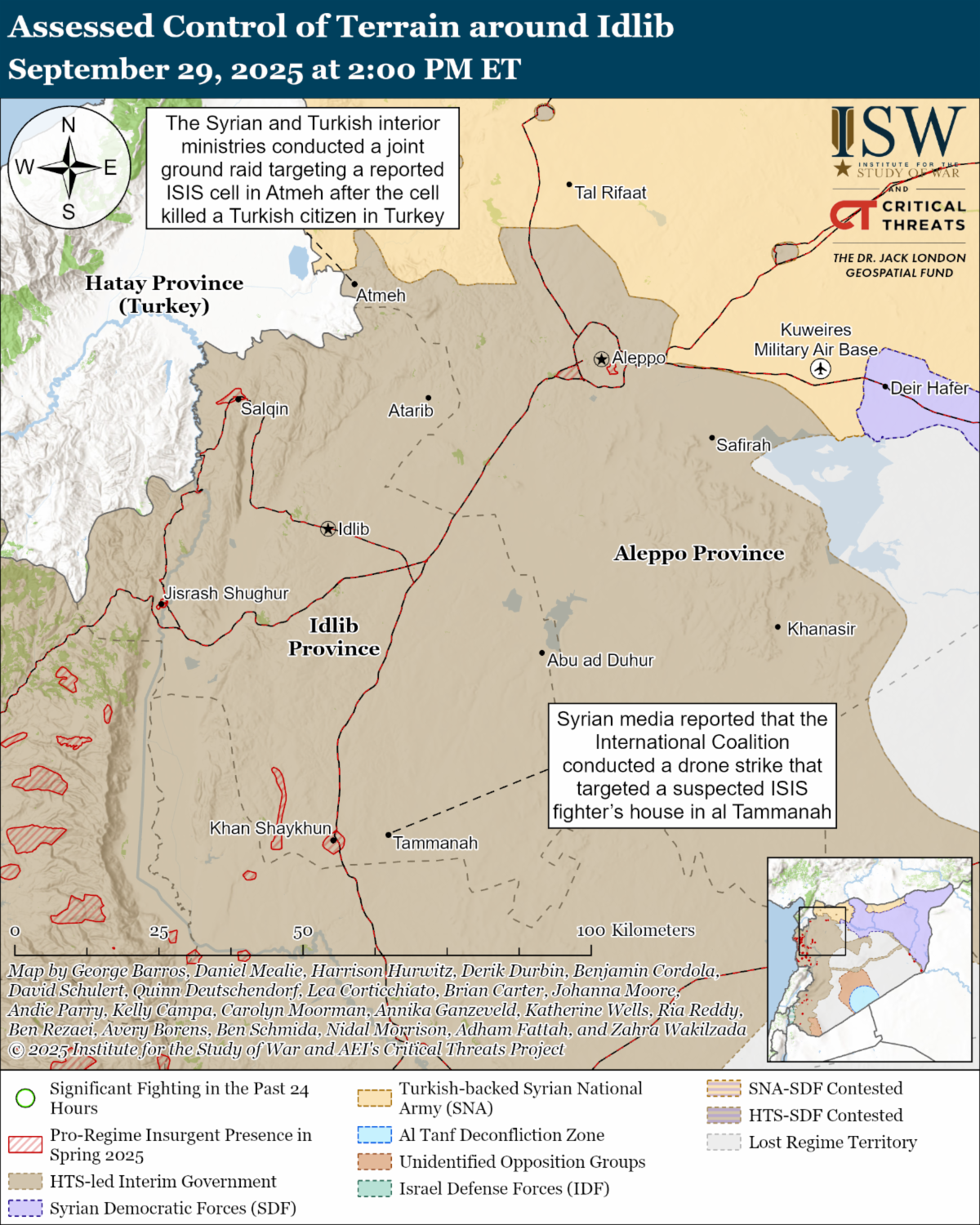
터키 군대가 알레포 동부 지역의 시리아 민주군(SDF) 통제 구역 근처 쿠웨이리스 공군 기지에 자산을 배치했다는 보고가 있습니다. 이는 터키와 시리아가 SDF에 대한 합동 군사 작전을 준비하고 있음을 시사할 수 있습니다. 시리아 국방부의 익명의 소식통은 터키 군대가 Samur 장갑차 발사 교량 시스템, 특정되지 않은 방공 시스템 및 헬리콥터를 공군 기지에 배치했다고 시리아 언론에 밝혔습니다.

이란에 대한 EU 제재:

유럽 연합(EU)은 2015년 포괄적 공동 행동 계획(JCPOA) 하에 해제했던 이란에 대한 제재를 9월 29일에 재부과했습니다. EU의 제재 재부과는 유엔 안전 보장 이사회(UNSC)가 9월 27일에 이란에 대한 스냅백 제재를 재부과한 이후에 이루어졌습니다. 이란 최고 지도자 알리 하메네이의 웹사이트는 스냅백 제재를 “심리전”으로 규정하고, 이란 정권이 인접 국가들과의 관계를 확대하고 제재의 영향을 완화하기 위해 “동방 정책”을 추진할 것을 촉구했습니다.

이라크 선거:

시아 코디네이션 프레임워크 정당들이 차기 이라크 총리 임명에 대해 논의하고 있다는 보도가 있습니다. 이는 2025년 11월 이라크 의회 선거를 앞두고 이들 정당이 자신들의 선거 지위에 대한 자신감을 보여주는 것입니다.

베이루트 방문:

이란 최고 국가 안보 위원회(SNSC) 서기 알리 라리자니가 SNSC 서기가 된 후 두 번째로 베이루트를 방문했습니다. 라리자니의 최근 몇 달간의 잦은 베이루트 방문은 레바논 국가가 헤즈볼라 무장을 해제하려는 노력을 하는 가운데, 이란이 레바논에서 영향력을 유지하는 것을 얼마나 우선시하는지를 보여줍니다.

참고 자료 및 최신 정보:

다음은 관련 내용에 대한 최신 정보를 제공하는 자료 및 링크입니다. (내용 확인 완료)

Disclaimer: 위 링크의 내용은 예시이며, 실제 최신 정보와는 차이가 있을 수 있습니다. 최신 정보는 직접 검색하여 확인하는 것이 좋습니다.

“`

[원문]

The European Union (EU) reimposed sanctions on Iran on September 29 that it had lifted under the 2015 Joint Comprehensive Plan of Action (JCPOA).

September 29, 2025

Information Cutoff: 2:00 pm ET

Adham Fattah, Ben Rezaei, Carolyn Moorman, Ben Schmida, Avery Borens, Nidal Morrison, Katherine Wells, Kelly Campa, Henry Jenks, Parker Hempel, Andie Parry, and Annika Ganzeveld

TOPLINES

The European Union (EU) reimposed sanctions on Iran on September 29 that it had lifted under the 2015 Joint Comprehensive Plan of Action (JCPOA). The EU’s reimposition of sanctions comes after the United Nations Security Council (UNSC) reimposed snapback sanctions on Iran on September 27. The EU froze the Iranian Central Bank and other major Iranian banks’ assets, banned the import of Iranian oil, and banned the export of technologies or materials that Iran could use for uranium enrichment, among other measures. The EU reimposed sanctions on Iranian economic institutions, such as the Khatam ol Anbia Construction Headquarters, that play an outsized role in the Iranian economy. The Khatam ol Anbia Construction Headquarters is controlled by the Islamic Revolutionary Guards Corps (IRGC) and has built power plants, oil vessels, and transportation infrastructure on behalf of the IRGC. The EU also reimposed sanctions on Iranian banks, such as Bank Sepah and Bank Melli, that have supported Iran’s defense industry. Iranian banks reportedly held at least 1.9 billion euros in assets in Europe as of March 2024. The reimposition of EU sanctions on Iran may further isolate Iran from international financial networks and reduce the volume of EU-Iran trade. The EU was Iran’s fifth largest trading partner in 2024. The full impact of the EU sanctions is currently unclear, however. The United States’ imposition of maximum pressure sanctions against Iran in 2018 has already significantly diminished the volume of EU-Iran trade in recent years. The EU’s reimposition of sanctions on September 29 follows the UNSC’s reimposition of snapback sanctions on Iran on September 27, which are similarly designed to politically and economically isolate Iran due to its failure to fulfill its obligations in the JCPOA.

Iranian Supreme Leader Ali Khamenei’s website framed snapback sanctions as “psychological warfare” and called on the regime to expand ties with neighboring countries and pursue a “Look East” policy to mitigate the impact of sanctions. A newspaper run by Khamenei’s website argued on September 28 that Iran must rely on its domestic strength and work with neighbors, “countries in the Global South,” and countries that are part of Iran’s “Look East” policy to mitigate the impact of Western sanctions. Iran’s “Look East” policy seeks to counter US pressure by building ties with countries such as China and Russia. This editorial is consistent with recent statements from Khamenei in May 2025 in which he framed Iran’s participation in multilateral institutions like BRICS and the Shanghai Cooperation Organization as “opportunities” for Iran. Iran joined BRICS in January 2024. Iranian officials have emphasized that Iran’s participation in BRICS provides opportunities for Iran to reduce its reliance on the US dollar and develop alternative financial platforms. Iran has also deepened economic, political, and security ties with Russia in recent years and recently joined the Russian-led Eurasian Economic Union (EAEU). Iran likely seeks to use its membership in multilateral institutions to reduce the impact of Western sanctions and to secure alternative trade routes, energy partners, and financial channels.

KEY TAKEAWAYS

  • Turkish Assets in Syria: The Turkish military’s reported deployment of assets to Kuweires Airbase near Syrian Democratic Forces (SDF)-controlled territory in eastern Aleppo Province may indicate that Turkey and Syria are preparing for a joint military operation against the SDF. An unspecified source from the Syrian Ministry of Defense told Syrian media that the Turkish military deployed Samur armored vehicle-launched bridge systems, unspecified air defense systems, and helicopters to the airbase.


  • EU Sanctions on IranThe European Union (EU) reimposed sanctions on Iran on September 29 that it had lifted under the 2015 Joint Comprehensive Plan of Action. The EU’s reimposition of sanctions comes after the United Nations Security Council (UNSC) reimposed snapback sanctions on Iran on September 27. Iranian Supreme Leader Ali Khamenei’s website framed snapback sanctions as “psychological warfare” and called on the regime to expand ties with neighboring countries and pursue a “Look East” policy to mitigate the impact of sanctions.

  • Iraqi Elections: Shia Coordination Framework parties are reportedly debating the appointment of the next Iraqi prime minister, which demonstrates the confidence that these parties have in their electoral position ahead of the November 2025 Iraqi parliamentary elections.

  • Larijani in Beirut: Iranian Supreme National Security Council (SNSC) Secretary Ali Larijani conducted his second visit to Beirut since becoming SNSC secretary. Larijani’s multiple visits to Beirut in recent months highlight the extent to which Iran is prioritizing retaining its influence in Lebanon amid Lebanese state efforts to disarm Hezbollah.

NEW EMAIL SUBSCRIPTION OPTIONS

ISW has launched newly customizable email subscription options. Existing subscribers have been auto enrolled in all lists. Click below to learn more about these options and customize your preferences.

ISW is powered by the support of individuals like you.

Help us stay independent and impactful.

Website | Jobs | Internships

Follow ISW on social media:

FacebookXYouTube | InstagramLinkedIn | Threads | Bluesky

Donate online or by sending a check to the Institute for the Study of War at 1400 16th Street NW, Suite #515, Washington, DC 20036. Please consider including the Institute for the Study of War in your estate plans.

ISW is a tax-exempt organization under section 501(c)(3) of the Internal Revenue Code. Donations are tax-deductible to the extent permitted by law.

ISW is a non-partisan, non-profit, public policy research organization. ISW advances an informed understanding of military affairs through reliable research, trusted analysis, and innovative education. We are committed to improving the nation’s ability to execute military operations and respond to emerging threats in order to achieve US strategic objectives.

댓글 달기

이메일 주소는 공개되지 않습니다. 필수 필드는 *로 표시됩니다

위로 스크롤