[ISW] 러시아 공세 작전 평가, 2026년 4월 14일

“`html

핵심 내용 요약:

  • 러시아는 무인 시스템 부대(USF)를 위해 드론 조달을 점차 중앙 집권화하고 있으며, 이는 긍정적 및 부정적 결과를 모두 초래할 것으로 예상됩니다.
  • 러시아 국가 두마는 4월 14일, 러시아 대통령 블라디미르 푸틴이 국제 또는 외국 법원에서 기소된 “러시아 시민”을 보호하기 위해 해외에서 러시아군 사용을 승인할 수 있도록 하는 법안을 통과시켰습니다.
  • 우크라이나 방위 산업 기반(DIB)은 생산 능력을 지속적으로 향상시키고 있지만, 추가 투자가 없이는 최대 잠재력을 달성할 수 없습니다.
  • 우크라이나의 유럽 파트너들은 우크라이나의 대공 방어 능력을 강화하는 동시에 공동 생산 협력을 확대하고 있습니다.
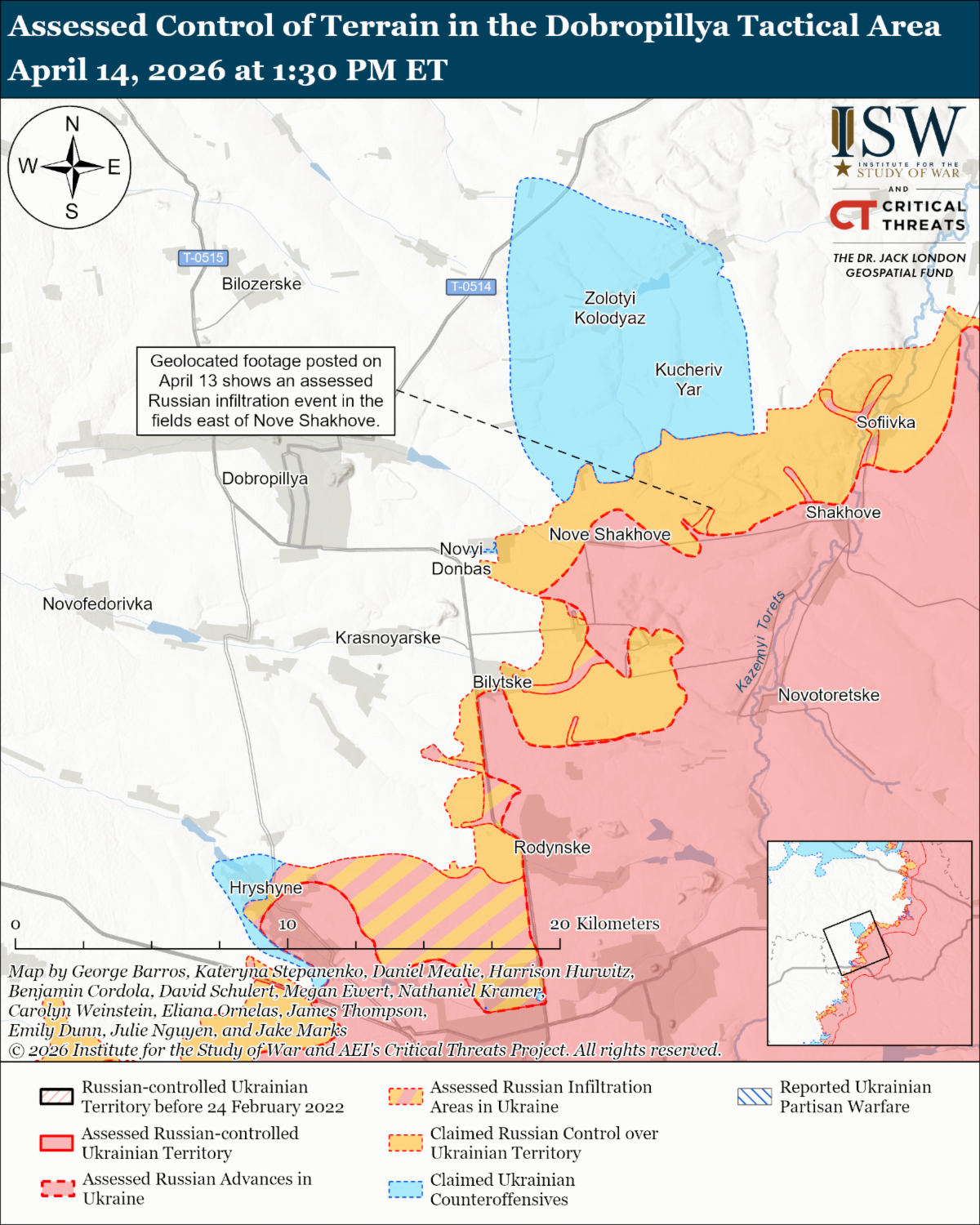
  • 4월 14일, 러시아군과 우크라이나군 모두 전진하지 못했습니다.
  • 우크라이나군은 벨고로드 지역의 러시아 레이더 시스템에 대한 중거리 공격 작전을 지속했습니다. 러시아군은 4발의 순항 미사일과 129대의 드론을 우크라이나를 향해 발사했습니다.

관련 최신 자료 및 링크:

  • 러시아의 드론 조달 중앙 집중화:

    러시아는 드론 기술 확보와 활용에 적극적으로 나서고 있으며, 이를 위한 중앙집권적 관리 체계를 강화하고 있습니다. 이는 드론의 효율적인 운용과 기술 개발을 촉진할 수 있지만, 동시에 특정 기업이나 정부 부처에 권력이 집중될 수 있다는 위험도 내포합니다.

  • 푸틴의 해외 군사력 사용 권한 강화:

    푸틴 대통령의 해외 군사력 사용 승인 권한 확대로 인해, 러시아는 자국민 보호를 명분으로 다른 국가에 대한 군사 개입을 쉽게 할 수 있게 되었습니다. 이는 국제 정세에 긴장을 고조시키고, 분쟁의 확산을 초래할 수 있습니다.

  • 우크라이나의 방위 산업과 유럽 파트너십:

    우크라이나는 자체 방위 산업 역량을 강화하는 동시에 유럽 국가들의 지원을 통해 무기 생산 능력을 확대하고 있습니다. 이는 전쟁 장기화에 대비하고, 서방 국가에 대한 의존도를 줄이는 데 기여할 것입니다. 유럽 파트너십은 우크라이나의 대공 방어 능력을 강화하는 데 중요한 역할을 하고 있습니다.

  • 전선 상황:

    4월 14일, 전선에서는 뚜렷한 진전이 없었지만, 우크라이나군은 러시아 레이더 시스템을 공격하는 등 지속적인 작전을 수행했습니다. 러시아의 미사일 및 드론 공격은 우크라이나의 군사 및 민간 기반 시설에 피해를 입히고 있습니다.

“`

[원문]

Russia is increasingly centralizing drone procurement for its Unmanned Systems Forces (USF), which will likely have both positive and negative consequences.

April 14, 2026

Data Cutoff: 12:30 PM ET

Samuel Shafiro, Justin Young, Kateryna Shymkiv, Diana Nasreddine, Anna Thacker, Christina Harward, Nikolai Sundstrom, and Frederick W. Kagan

TOPLINES

Russia is increasingly centralizing drone procurement for its Unmanned Systems Forces (USF), which will likely have both positive and negative consequences. A Russian milblogger claimed on April 13 that there is a “new rule” that the Russian Ministry of Defense (MoD) Directorate for Advanced Interservice Research and Special Projects will no longer issue drones to all frontline units. The milblogger claimed that the Russian MoD will now only provide drones to the USF and that USF commander Lieutenant Colonel Yuri Vaganov will personally oversee the distribution. The milblogger accused Vaganov of being involved in military corruption and claimed that the new rule will create a drone “famine” in regular units. ISW cannot independently confirm the milblogger’s claims, but the reported new rule would be consistent with Russia’s continued effort to centralize informal specialized drone units and its drone procurement and distribution system. Centralized control over drone distribution may allow Russian forces to more heavily concentrate drones and to supply more trained personnel in select areas of the front, but may also hamper their ability to innovate quickly. This new system will likely create a state monopoly over procurement, allowing for more corruption and eroding the volunteer-based procurement movement.

The Russian State Duma adopted a law on April 14 that allows Russian President Vladimir Putin to authorize the use of the Russian Armed Forces overseas to defend “Russian citizens” being prosecuted in international or foreign national courts. BBC’s Russian Service noted on April 14 that the phrasing of the law suggests that it does not apply to all Russian citizens arrested overseas. BBC noted that it applies only to Russian citizens who are being prosecuted in international or national courts “vested with powers” by foreign states without Russian participation or by international bodies whose authority does not derive either from Russian international treaties or a United Nations Security Council (UNSC) resolution adopted to implement powers provided for in Chapter VII of the United Nations (UN) Charter. The text of the law is likely purposefully vague, and it is unclear how Russian President Vladimir Putin would employ Russian forces in such a scenario.

KEY TAKEAWAYS

  • Russia is increasingly centralizing drone procurement for its Unmanned Systems Forces (USF), which will likely have both positive and negative consequences.

  • The Russian State Duma adopted a law on April 14 that allows Russian President Vladimir Putin to authorize the use of the Russian Armed Forces overseas to defend “Russian citizens” being prosecuted in international or foreign national courts.

  • The Ukrainian defense industrial base (DIB) continues to increase its production capabilities but is unable to achieve its maximum potential without further investment.

  • Ukraine’s European partners continue to strengthen Ukraine’s air defense capabilities while increasing joint production cooperation.

  • Neither Russian nor Ukrainian forces advanced on April 14. 

  • Ukrainian forces continued their mid-range strike campaign against Russian radar systems in Belgorod Oblast. Russian forces launched four cruise missiles and 129 drones against Ukraine.

EMAIL SUBSCRIPTION OPTIONS

ISW offers customizable email subscription options. Click below to learn more and customize your preferences.

ISW is powered by the support of individuals like you.

Help us stay independent and impactful.

Website | Jobs | Internships

Follow ISW on social media:

FacebookXYouTube | InstagramLinkedIn | Threads | Bluesky

© 2026 Institute for the Study of War and AEI’s Critical Threats Project. All rights reserved.

Donate online or by sending a check to the Institute for the Study of War at 1400 16th Street NW, Suite #515, Washington, DC 20036. Please consider including the Institute for the Study of War in your estate plans.


ISW is a tax-exempt organization under section 501(c)(3) of the Internal Revenue Code. Donations are tax-deductible to the extent permitted by law.

ISW is a non-partisan, non-profit, public policy research organization. ISW advances an informed understanding of military affairs through reliable research, trusted analysis, and innovative education. We are committed to improving the nation’s ability to execute military operations and respond to emerging threats in order to achieve US strategic objectives.

댓글 달기

이메일 주소는 공개되지 않습니다. 필수 필드는 *로 표시됩니다

위로 스크롤