[ISW] 이란 업데이트 특별 보고서, 2026년 4월 14일

“`html

핵심 내용 요약:

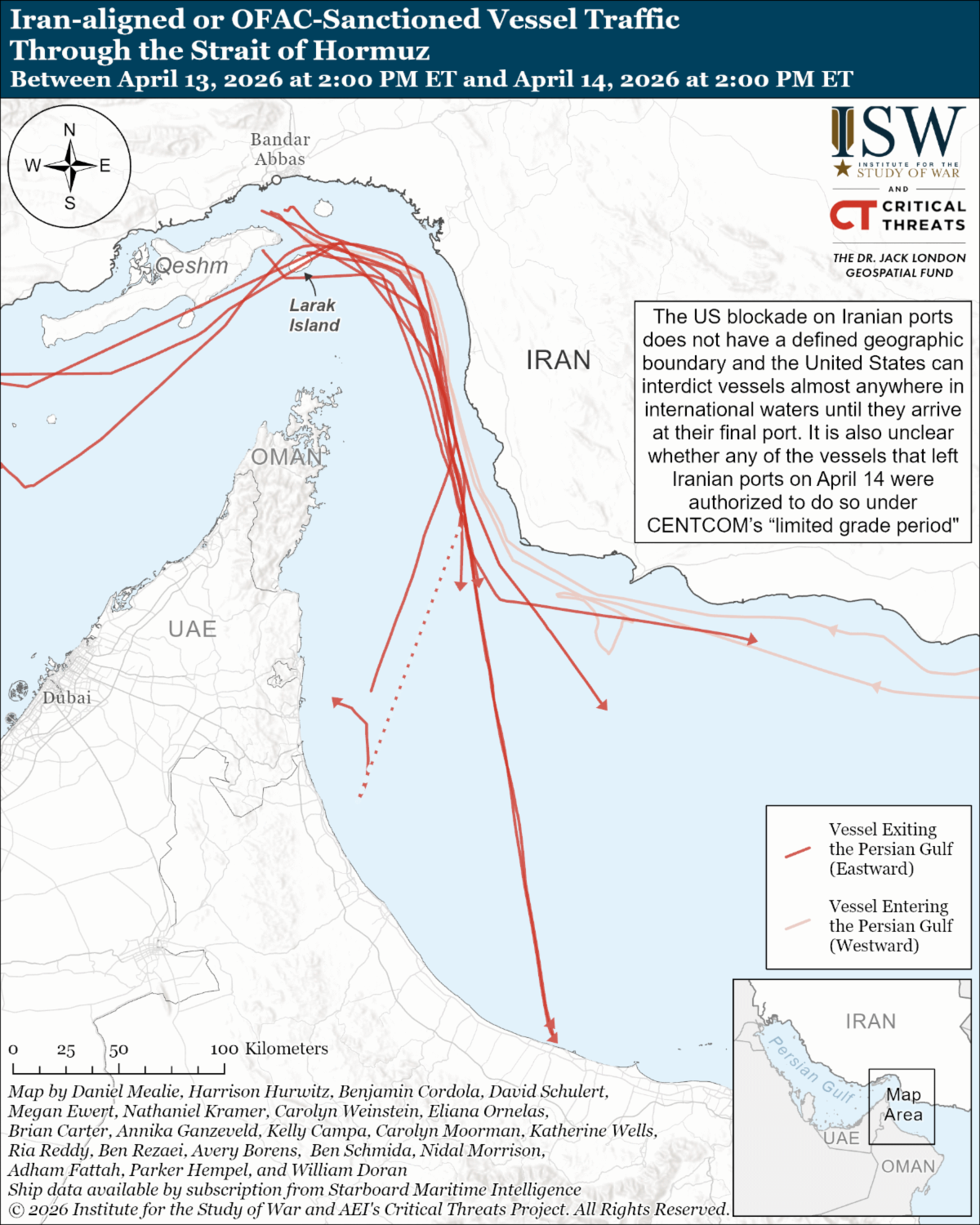
  • 미국 중앙사령부(CENTCOM) 발표: CENTCOM이 4월 13일 이란 항구 봉쇄를 시행한 이후, 이란 항구를 출입하는 선박은 없었음. 미국의 이란 항구 봉쇄는 명확한 지리적 경계가 없으며, 최종 목적지에 도착하기 전까지 국제 해역 어디에서든 선박을 단속할 수 있음. 4월 14일 이란 항구를 떠난 선박들이 CENTCOM의 “제한적 등급 기간” 하에 출항 허가를 받았는지 불분명함.
  • 미국 제재: 4월 19일 만료 예정인 이란 원유 수출에 대한 30일 제재 유예를 미국이 연장하지 않기로 결정함에 따라, 이란의 원유 수출 능력은 미국의 항구 봉쇄에 더해 더욱 제약될 것임. 두 명의 미국 관리는 4월 14일 로이터 통신에 미국 재무부가 4월 19일 이후 이란 원유에 대한 제재를 시행할 것이라고 밝힘.
  • 이란 대응 방안: 이란은 미국 항구 봉쇄에 대한 시험과 잠재적 협상 전에 긴장을 고조시키는 것을 피하기 위해, 선적을 일시적으로 중단하는 것을 고려하고 있음 (블룸버그 통신 4월 14일 보도). 이란은 원유 저장 공간 부족으로 인해 제한된 기간 동안만 선적을 중단할 수 있음. 또한, 미국과의 합의, 봉쇄 돌파 시도 또는 전쟁 재개 등 다양한 대응 방안을 모색할 수 있음.
  • 이란의 경고: 이란 최고지도자 보좌관 모하마드 모크베르는 미국의 이란 항구 봉쇄에 대응하여 미국 동맹국과 주변국에 “새로운 전선을 열고” “경제적 압력을 가중”하겠다고 경고함. 이는 미국에게 봉쇄 해제를 압박하기 위한 의도로 보임. 모크베르는 예멘의 후티 반군을 언급했을 수 있으며, 후티 반군은 지금까지 전쟁 기간 동안 홍해에서 국제 해운에 대한 공격을 자제해 왔음. 아랍 관리는 4월 14일 월스트리트 저널에 이란이 후티 반군에게 바브엘만데브 해협을 “폐쇄”하도록 압력을 가하고 있다고 전함.
  • 미국-이란 협상 가능성: 도널드 트럼프 미국 대통령은 4월 14일 미국과 이란이 “향후 이틀 내” 파키스탄 이슬라마바드에서 회담을 가질 수 있다고 언급함. 한 고위 이란 소식통은 4월 14일 서방 언론에 미국과 이란이 4월 17일부터 19일까지 회담을 위한 가능성을 열어두고 있지만, 아직 확정된 날짜는 없다고 밝힘.

관련 최신 자료 및 링크:

  1. 로이터 통신 – “미국, 이란 원유 제재 강화 발표”: 4월 14일 로이터 통신 보도에 따르면 미국이 이란 원유 수출에 대한 제재를 강화할 예정이며, 이는 이란의 경제적 어려움을 가중시킬 것으로 예상됨.
    Reuters – US to tighten sanctions on Iranian oil exports
  2. 블룸버그 통신 – “이란, 미국 봉쇄 회피 위해 선적 일시 중단 고려”: 4월 14일 블룸버그 통신 보도에 따르면 이란은 미국의 항구 봉쇄에 대응하기 위해 원유 선적을 일시적으로 중단하는 방안을 고려하고 있음.
  3. 월스트리트 저널 – “이란, 후티 반군에 바브엘만데브 해협 폐쇄 압력”: 4월 14일 월스트리트 저널 보도에 따르면 이란이 후티 반군에게 바브엘만데브 해협을 봉쇄하도록 압력을 가하고 있으며, 이는 지역 안보에 심각한 위협이 될 수 있음.
  4. 뉴욕 타임스 – “미국과 이란, 새로운 외교적 대화 가능성 모색”: 4월 14일 뉴욕 타임스 보도에 따르면 미국과 이란은 파키스탄에서 회담을 가질 가능성을 열어두고 있으며, 이는 양국 간의 긴장 완화 시도로 해석될 수 있음.
    The New York Times – US and Iran Explore Possibility of New Diplomatic Talks

참고: 위 링크들은 최신 자료를 기반으로 하며, 각 언론사의 보도 내용을 간략하게 요약했습니다. 링크된 기사들을 직접 확인하시면 더 자세한 정보를 얻으실 수 있습니다.

“`

[원문]

US Central Command (CENTCOM) announced that no vessels have breached the US blockade on Iranian ports since CENTCOM implemented the blockade on April 13.

April 14, 2026

Data Cutoff: 2:00 PM ET

Ben Schmida, Katherine Wells, Ben Rezaei, Avery Borens, Parker Hempel, Will Doran, Adham Fattah, Carolyn Moorman, Nidal Morrison, and Annika Ganzeveld

As the Middle East crisis evolves, ISW urgently needs your support.

Help us stay independent and impactful.

TOPLINES

US Central Command (CENTCOM) announced that no vessels have breached the US blockade on Iranian ports since CENTCOM implemented the blockade on April 13. CENTCOM implemented a blockade on April 13 against all vessels transiting to or from Iranian ports. The US blockade on Iranian ports does not have a defined geographic boundary, and the United States can interdict vessels almost anywhere in international waters until they arrive at their final port. US forces have previously demonstrated their ability to interdict vessels in international waters. US officials told the Wall Street Journal on April 14 that US forces will likely attempt to intercept or “quarantine” any vessels that violate the blockade in the Arabian Sea to limit the threat of attacks from the Iranian coast. Vessels transiting the Strait of Hormuz are therefore not automatically breaching the US blockade. Commercially available maritime data indicates that at least eight vessels departed the Strait of Hormuz, including six Iranian or Iranian-linked vessels, on April 14. One of the vessels, the US-sanctioned Rich Starry oil tanker, departed from Amjan Port in the United Arab Emirates (UAE) on April 13. Other Iranian or Iranian-linked vessels, including the Elpis and Christianna, also left the strait after departing Iranian ports. Commercially available maritime data also indicates that at least nine vessels entered the Strait of Hormuz, including three Iranian or Iranian-linked ships. One of the entering vessels was the Ocean Energy cargo ship, which docked at Iran’s Bandar Abbas Port on April 13. It is unclear whether this vessel was exempted from the blockade. Reuters reported that a US military notice sent to mariners exempts humanitarian shipments to Iran from the US blockade. CENTCOM also announced that six merchant vessels complied with the US direction to return to an Iranian port in the Gulf of Oman. CENTCOM has not interdicted any vessels at the time of this writing.

The United States’ decision not to renew a 30-day sanctions waiver for Iranian oil exports, which is set to expire on April 19, will further constrain Iran’s ability to export oil in addition to the US blockade on Iranian ports. Two US officials told Reuters on April 14 that the US Treasury Department will enforce sanctions on Iranian oil after April 19. US Treasury Secretary Scott Bessent also told reporters on April 14 that the US blockade on Iranian ports will ensure that no vessels from the People’s Republic of China (PRC) are “able to get their [Iranian] oil.” The PRC purchases more than 90 percent of Iran’s oil exports. A sanctions-focused US analyst estimated on April 13 that a successful blockade on Iranian ports would cost the regime around $435 million USD per day, leaving Iran with few alternatives to export and import goods.

KEY TAKEAWAYS

  • US Central Command (CENTCOM) announced that no vessels have breached the US blockade on Iranian ports since CENTCOM implemented its blockade on April 13. The US blockade on Iranian ports does not have a defined geographic boundary, and the United States can interdict vessels almost anywhere in international waters until they arrive at their final port. It is unclear whether any of the vessels that left Iranian ports on April 14 were authorized to do so under CENTCOM’s “limited grade period.”

  • The United States’ decision not to renew a 30-day sanctions waiver for Iranian oil exports, which is set to expire on April 19, will further constrain Iran’s ability to export oil in addition to the US blockade on Iranian ports. Two US officials told Reuters on April 14 that the US Treasury Department will enforce sanctions on Iranian oil after April 19.

  • Iran is reportedly considering temporarily pausing shipments to avoid testing the US blockade on Iranian ports and raising tensions ahead of possible talks, according to a person familiar with Iranian decision-making on the Strait of Hormuz speaking to Bloomberg on April 14. Iran would only be able to pause shipments for a limited period of time before it would start to run out of room to store oil. Iran could also pursue several other courses of action in response to the US blockade, including agreeing to a deal acceptable to the United States, attempting to run the blockade, or resuming the war.

  • Iranian Supreme Leader Adviser Mohammad Mokhber warned that Iran will “open new fronts” and “increase economic pressures” on US allies and regional countries in response to the US blockade on Iranian ports, likely to try to coerce the United States to end its blockade. Mokhber may have been referring to the Houthis, which has not conducted attacks on international shipping in the Red Sea during the war thus far. Arab officials told the Wall Street Journal on April 14 that Iran is pressuring the Houthis to “close” the Bab al Mandeb Strait.


  • US President Donald Trump stated on April 14 that the United States and Iran may hold another round of talks in Islamabad, Pakistan, “over [the] next two days.” A senior Iranian source told Western media on April 14 that the United States and Iran are keeping April 17 through 19 open for possible talks, but that no date has been confirmed.

EMAIL SUBSCRIPTION OPTIONS

ISW offers customizable email subscription options. Click below to learn more and customize your preferences.

Website | Jobs | Internships

Follow ISW on social media:

FacebookXYouTube | InstagramLinkedIn | Threads | Bluesky

© 2026 Institute for the Study of War and AEI’s Critical Threats Project. All rights reserved.

Donate online or by sending a check to the Institute for the Study of War at 1400 16th Street NW, Suite #515, Washington, DC 20036. Please consider including the Institute for the Study of War in your estate plans.

ISW is a tax-exempt organization under section 501(c)(3) of the Internal Revenue Code. Donations are tax-deductible to the extent permitted by law.

ISW is a non-partisan, non-profit, public policy research organization. ISW advances an informed understanding of military affairs through reliable research, trusted analysis, and innovative education. We are committed to improving the nation’s ability to execute military operations and respond to emerging threats in order to achieve US strategic objectives.

댓글 달기

이메일 주소는 공개되지 않습니다. 필수 필드는 *로 표시됩니다

위로 스크롤