[ISW] 이란 업데이트, 2025년 9월 30일

“`html

핵심 요약:

다음은 분석의 주요 내용입니다:

  • 이란 정권 승계 계획: 이란 고위 관리들은 잠재적인 군사적 충돌에 대비하고 있는 것으로 보입니다. 이란 관리들은 이스라엘과 이란 간의 현재 휴전이 붕괴되고 언젠가 다시 전투가 재개될 것이라고 지속적으로 믿고 있습니다. 또한, 이란 고위 군 지휘관들은 이란 전역의 군사 및 방공 부대를 계속 점검하고 있습니다.
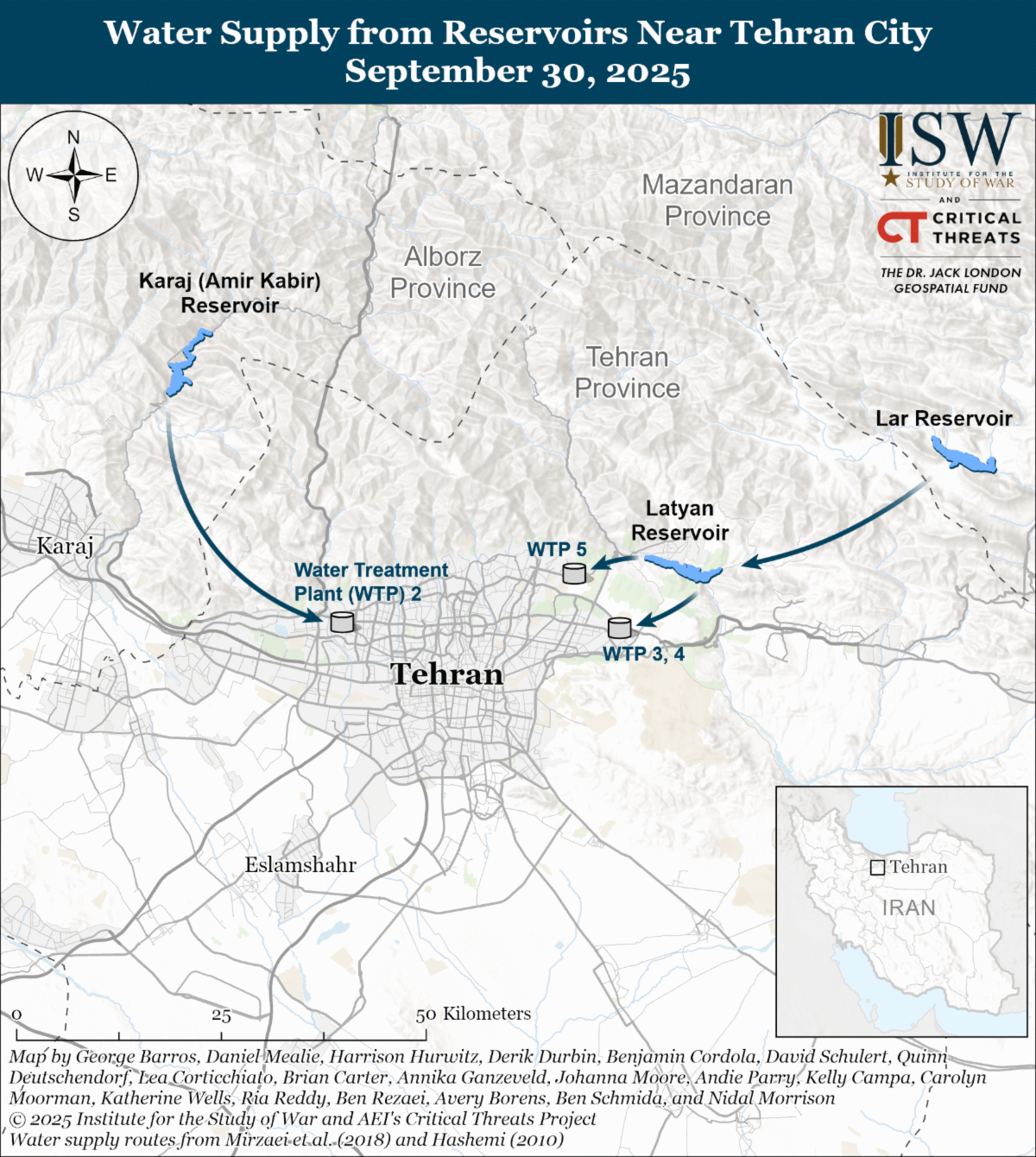
  • 이란 물 및 에너지 위기: 악화되는 이란의 물 및 에너지 위기는 이란 국민들의 정권에 대한 불만을 점진적으로 증가시키고, 정권 정당성에 대한 기존의 도전을 심화시킬 수 있습니다. 2024년 9월부터 2025년 9월까지 카라지 댐의 저수량은 1억 1,100만 입방 미터에서 2,800만 입방 미터로 감소하여 테헤란에 전력을 공급할 수 없게 되었습니다.
  • 이라크 영공 우위: 이라크 국가안보보좌관 카심 알 아라지는 9월 30일 바그다드에서 이란군 정보부장 세예드 마지드 미라흐마디 준장과의 회담에서 이라크가 이스라엘의 이란 공격을 위한 이라크 영공 사용을 막기 위해 “모든 필요한 조치”를 취할 것이라고 밝혔습니다. 이란이 지원하는 이라크 정치인과 민병대 지도자들은 오랫동안 이라크 연방 정부가 미국과 이스라엘의 이라크 영공 통과 능력을 제한하는 정책을 채택할 것을 촉구해 왔습니다.

최신 자료 및 관련 링크:

다음은 관련 내용에 대한 최신 자료 및 정보를 얻을 수 있는 링크입니다:

  • 이란-이스라엘 긴장:

    (주의: 링크된 사이트의 정보는 항상 최신 정보를 반영하지 않을 수 있으며, 다양한 관점을 포함하고 있을 수 있습니다. 해당 정보에 대한 비판적인 접근이 필요합니다.)

  • 이란의 물 및 에너지 위기:

    • 세계은행의 이란 개요: 이란의 경제 상황, 인프라 및 지속 가능한 개발에 대한 정보를 제공합니다. 특히 물과 에너지 관련 문제에 대한 관련 자료를 찾아볼 수 있습니다.
    • 유엔의 이란 관련 페이지: 유엔의 이란 관련 활동, 보고서, 그리고 기후변화 및 지속 가능한 개발에 관련된 자료를 제공합니다.

    (주의: 링크된 사이트의 정보는 항상 최신 정보를 반영하지 않을 수 있으며, 다양한 관점을 포함하고 있을 수 있습니다. 해당 정보에 대한 비판적인 접근이 필요합니다.)

  • 이라크 영공 관련:

    (주의: 링크된 사이트의 정보는 항상 최신 정보를 반영하지 않을 수 있으며, 다양한 관점을 포함하고 있을 수 있습니다. 해당 정보에 대한 비판적인 접근이 필요합니다.)

면책 조항: 위에 제공된 링크는 정보 제공 목적으로만 제공되며, 링크된 웹사이트의 정확성, 완전성 또는 적시성에 대해 보증하지 않습니다.

“`

[원문]

Senior Iranian officials appear to be preparing for potential military conflict…

September 30, 2025

Information Cutoff: 2:00 pm ET

Ben Rezaei, Zahra Wakilzada, Ben Schmida, Carolyn Moorman, Adham Fattah, Avery Borens, Andie Parry, and Brian Carter

TOPLINES

Senior Iranian officials appear to be preparing for potential military conflict. Iranian officials continue to believe that the current ceasefire between Israel and Iran will collapse and fighting will resume at some point in the future. Iranian Deputy Interior Minister for Security and Law Enforcement and National Security Council (NSC) Secretary Ali Akbar Pour Jamshidian stated on September 27 that the Supreme National Security Council (SCNC) had directed all Iranian military and civilian officials to designate several successors to ensure continuity of governance in the event of leadership disruption. Pour Jamshidian added that the Interior Ministry adopted the same decision and designated several individuals, down to provincial governors, as successors within the Interior Ministry. The SNSC rejected Pour Jamshidian’s statement on September 27 and denied holding any meeting on this issue. The SNSC likely pursued succession planning as a part of the Iranian government’s attempts to amend issues it faced during the 12-day war, including those posed by the Israeli decapitation campaign that targeted senior Iranian officials. Israeli strikes destroyed the Islamic Revolutionary Guards Corps (IRGC) Aerospace Force command bunker on June 13 and killed senior IRGC commanders. The death of these commanders disrupted Iran’s command-and-control and made responding to Israeli attacks extremely difficult. The SNSC’s succession planning also comes after Khamenei’s absence during the war, which prevented his principal subordinates from reaching him for rapid decisions. Khamenei also reportedly named three senior clerics as potential successors during the war and directed the Iranian Assembly of Experts to choose from those clerics to ensure an orderly wartime transition. The rare decision to take steps to ensure a smooth succession suggests that senior officials have already considered succession plans, even before the SNSC’s reported order.

Senior Iranian military commanders also continue to inspect military and air defense units across Iran. Khatam ol Anbia Air Defense Headquarters Commander Brigadier General Alireza Sabahi Fard inspected the Dezful Air Defense Group on September 29 and assessed its combat readiness. Armed Forces General Staff Chief Major General Abdol Rahim Mousavi separately inspected Artesh and IRGC naval, commando, and aviation units in Hormozgan Province on September 30. Mousavi assessed the capabilities of different units, met with commanders and personnel, and emphasized that both navies have achieved full readiness ”for a possible future conflict.”

KEY TAKEAWAYS

  • Iranian Succession Planning: Senior Iranian officials appear to be preparing for potential military conflict. Iranian officials continue to believe that the current ceasefire between Israel and Iran will collapse and fighting will resume at some point in the future. Senior Iranian military commanders also continue to inspect military and air defense units across Iran.

  • Iranian Water and Energy Crisis: Iran’s worsening water and energy crisis could gradually increase the Iranian public’s frustrations with the regime and compound existing challenges to regime legitimacy. The Karaj Dam’s water reserves decreased from 111 million cubic meters to 28 million cubic meters between September 2024 and September 2025, making the dam incapable of generating electricity for Tehran.

  • Iraqi Airspace Superiority: Iraqi National Security Advisor Qasim al Araji said on September 30 that Iraq would take “all necessary measures” to prevent Israel from using Iraqi airspace to attack Iran, during a meeting with Iranian Armed Forces Intelligence head Brigadier General Sayyed Majid Mirahmadi in Baghdad. Iranian-backed Iraqi politicians and militia figures have long called on the Iraqi federal government to adopt policies that would restrict the United States and Israel’s ability to fly through Iraqi airspace.

NEW EMAIL SUBSCRIPTION OPTIONS

ISW has launched newly customizable email subscription options. Existing subscribers have been auto enrolled in all lists. Click below to learn more about these options and customize your preferences.

ISW is powered by the support of individuals like you.

Help us stay independent and impactful.

Website | Jobs | Internships

Follow ISW on social media:

FacebookXYouTube | InstagramLinkedIn | Threads | Bluesky

Donate online or by sending a check to the Institute for the Study of War at 1400 16th Street NW, Suite #515, Washington, DC 20036. Please consider including the Institute for the Study of War in your estate plans.

ISW is a tax-exempt organization under section 501(c)(3) of the Internal Revenue Code. Donations are tax-deductible to the extent permitted by law.

ISW is a non-partisan, non-profit, public policy research organization. ISW advances an informed understanding of military affairs through reliable research, trusted analysis, and innovative education. We are committed to improving the nation’s ability to execute military operations and respond to emerging threats in order to achieve US strategic objectives.

댓글 달기

이메일 주소는 공개되지 않습니다. 필수 필드는 *로 표시됩니다

위로 스크롤