[ISW] 이란 업데이트 특별 보고서, 2026년 5월 1일

“`html

핵심 내용 요약:

  • 도널드 트럼프 미국 대통령은 이란의 최신 제안에 “만족하지 않는다”고 밝혔습니다. 이는 핵 프로그램 및 호르무즈 해협과 같은 핵심 문제에 대한 이란의 지속적인 유연성 부족을 반영합니다.
  • 이란은 잠재적인 분쟁 재개를 앞두고 현재의 휴전을 미사일 및 드론 역량을 재건하는 데 활용하려 합니다. 서방 언론은 이란이 지하에 숨기거나 미국 및 이스라엘 공습 잔해 밑에 묻어둔 무기 및 미사일 발사기에 대한 접근을 시도했다고 보도했습니다. 분쟁이 재개될 경우, 이란은 이러한 발사기를 사용하여 미국, 이스라엘, 그리고 기타 지역 국가들을 상대로 공격을 재개할 가능성이 높습니다.
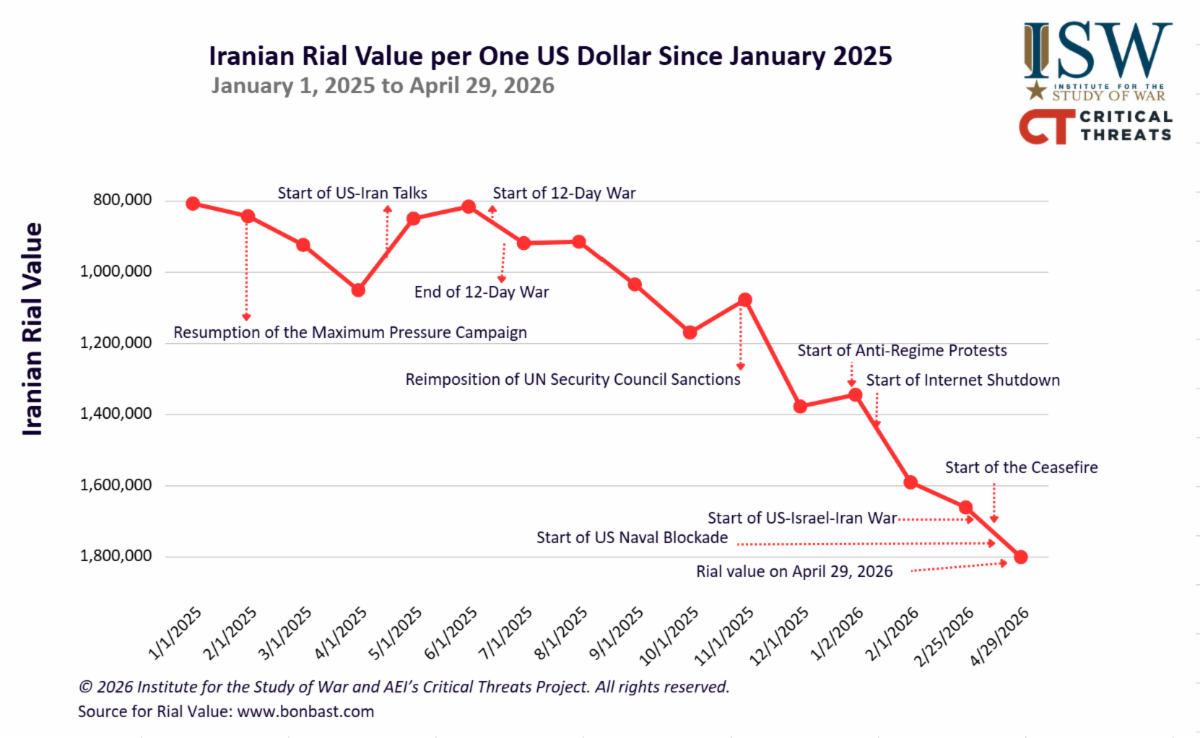
  • 이란 언론 및 관계자들은 미국의 군사적, 경제적 압력으로 경제 상황이 악화되었다고 주장하며, 이란의 심각한 경제 상황에 대한 책임을 회피하려 하고 있습니다. 미국의 해상 봉쇄 및 제재가 이란에 경제적 압력을 가하고 있는 것은 사실이지만, 경제에 대한 정권의 역사적인 무능한 관리, 부패, 그리고 이슬람 혁명 수비대(IRGC)의 경제 기관 지배가 이란 경제 악화에 주요한 역할을 했습니다.

관련 최신 자료 및 링크:

“`

[원문]

US President Donald Trump stated that he is “not satisfied” with Iran’s latest proposal. Iranian media reported on May 1 that Iran submitted a new proposal to the United States through Pakistan.

May 1, 2026

Data Cutoff: 2:00 PM ET

Ben Rezaei, Katherine Wells, Avery Borens, Carolyn Moorman, William Doran, Ria Reddy, and Annika Ganzeveld

As the Middle East crisis evolves, ISW urgently needs your support.

Help us stay independent and impactful.

TOPLINES

US President Donald Trump stated that he is “not satisfied” with Iran’s latest proposal. Iranian media reported on May 1 that Iran submitted a new proposal to the United States through Pakistani mediators on April 30. An unspecified regional source told Axios on May 1 that Iran delivered its response to the United States’ amendments to Iran’s previous proposal. The source stated that US Special Envoy to the Middle East Steve Witkoff had sent amendments to Iran on April 27 that called on Iran to reinsert nuclear issues into the draft proposal and avoid moving enriched uranium from bombed facilities or resuming activity at those sites during negotiations. Iran’s previous proposal had sought to postpone US-Iran negotiations about nuclear issues to a later date. Trump’s dissatisfaction with Iran’s latest proposal reflects continued Iranian inflexibility on key issues, such as the nuclear program and the Strait of Hormuz. The Wall Street Journal reported on May 1 that Iran’s latest proposal calls for discussing “Tehran’s conditions for opening the Strait of Hormuz at the same time as US guarantees to end its attacks and unwind its blockade of Iranian ports.” The Wall Street Journal noted that Iran had previously made the removal of the US blockade a precondition for talks. A Wall Street Journal reporter separately stated that Iran’s proposal “still puts nuclear [issues] in later stages of talks” and “rules out missile negotiations.” Iranian officials have continued to reiterate that the nuclear file is “closed” and not subject to negotiations. First Deputy Parliament Speaker Ali Nikzad stated that the Strait of Hormuz will not return to its previous state and framed both the strait and nuclear advancements as Iranian “rights.” Supreme Leader Mojtaba Khamenei’s Telegram channel separately framed Iranian control over the Strait of Hormuz as a core pillar of Iran’s regional strategy, which suggests that the regime has not softened its position on the Strait of Hormuz.

Iran is exploiting the current ceasefire to try to reconstitute its missile and drone capabilities ahead of a potential resumption of conflict. An unspecified US official and two people familiar with the matter told NBC News on May 1 that Iran is trying to recover weapons that it hid underground or were buried under debris from US and Israeli airstrikes. CNN previously reported on April 14 that satellite imagery showed that Iran was clearing debris at missile base entrances to regain access to missile launchers. Iran would likely use these launchers to restart its attack campaign against US interests, Israel, and other regional countries in the event of a resumption of conflict.

Two unspecified senior Iranian sources separately told Reuters on May 1 that Iran has activated air defenses and plans to conduct a “wide” response if attacked. The officials stated that Iran assesses that the United States may conduct “short, intensive” strikes followed by Israeli action. Islamic Revolutionary Guards Corps (IRGC)-affiliated media reported on April 30 that Iranian air defenses activated across multiple areas of Tehran Province to counter small drones and reconnaissance drones. US and Israeli combined strikes have significantly degraded Iran’s air defense capabilities during the war.

KEY TAKEAWAYS

  • US President Donald Trump stated that he is “not satisfied” with Iran’s latest proposal. Trump’s dissatisfaction with Iran’s latest proposal reflects continued Iranian inflexibility on key issues, such as the nuclear program and the Strait of Hormuz.

  • Iran is exploiting the current ceasefire to try to reconstitute its missile and drone capabilities ahead of a potential resumption of conflict. Western media reported that Iran has made attempts to regain access to weapons and missile launchers that it hid underground or were buried under debris from US and Israeli airstrikes. Iran would likely use these launchers to restart its attack campaign against US interests, Israel, and other regional countries in the event of a resumption of conflict.

  • Iranian media and officials are attempting to deflect responsibility for Iran’s dire economic conditions by attributing these conditions to US military and economic pressure. The US naval blockade and sanctions are certainly applying economic pressure on Iran, but the regime’s historical mismanagement of the economy, corruption, and the Islamic Revolutionary Guard Corps (IRGC)’s dominance over economic institutions have played a major role in deteriorating the Iranian economy.

EMAIL SUBSCRIPTION OPTIONS

ISW offers customizable email subscription options. Click below to learn more and customize your preferences.

Website | Jobs | Internships

Follow ISW on social media:

FacebookXYouTube | InstagramLinkedIn | Threads | Bluesky

© 2026 Institute for the Study of War and AEI’s Critical Threats Project. All rights reserved.

Donate online or by sending a check to the Institute for the Study of War at 1400 16th Street NW, Suite #515, Washington, DC 20036. Please consider including the Institute for the Study of War in your estate plans.

ISW is a tax-exempt organization under section 501(c)(3) of the Internal Revenue Code. Donations are tax-deductible to the extent permitted by law.

ISW is a non-partisan, non-profit, public policy research organization. ISW advances an informed understanding of military affairs through reliable research, trusted analysis, and innovative education. We are committed to improving the nation’s ability to execute military operations and respond to emerging threats in order to achieve US strategic objectives.

댓글 달기

이메일 주소는 공개되지 않습니다. 필수 필드는 *로 표시됩니다

위로 스크롤