[ISW] 러시아 공세 캠페인 평가, 2025년 9월 29일

“`html

핵심 내용 요약:

  • 러시아, 가을 징집 시작: 블라디미르 푸틴 러시아 대통령은 10월 1일부터 연 2회 실시되는 가을 징집을 시작하는 법령을 발표했습니다.
  • 국방비 대폭 증액: 크렘린은 2026년에 국가 안보 및 국방에 17조 루블(1,830억 달러)을 지출할 계획이며, 이는 연간 지출 계획의 약 38%에 해당합니다.
  • 선전 방송 지원 확대: 러시아 정부는 소셜 미디어 및 인터넷 접근 제한과 연계하여 텔레비전 선전 방송에 대한 자금 지원을 늘릴 계획입니다.
  • 미국의 우크라이나 장거리 공격 승인: 키스 켈로그 우크라이나 특사는 우크라이나가 러시아 영토를 상대로 장거리 공격을 수행할 수 있도록 미국이 승인했음을 인정했습니다.
  • 토마호크 미사일 지원 방해 시도: 크렘린 관계자들은 미국이 우크라이나에 토마호크 미사일을 제공하는 것을 사전에 막으려 시도하고 있습니다.
  • NATO 영공 내 정체불명의 드론 출현: 유럽 관계자들은 NATO 영공 내에서 정체불명의 드론이 비행하고 있다는 사실을 계속 보고하고 있습니다.
  • 몰도바, 친유럽 성향 정당 승리: 몰도바에서 9월 28일 치러진 선거에서 친유럽 성향의 행동과 연대당(PAS)이 의회 과반수를 확보했습니다. 크렘린과 연계된 몰도바 정치인 및 러시아 관리들은 선거 결과에 이의를 제기하고, 향후 시위를 촉구할 준비를 하고 있습니다.
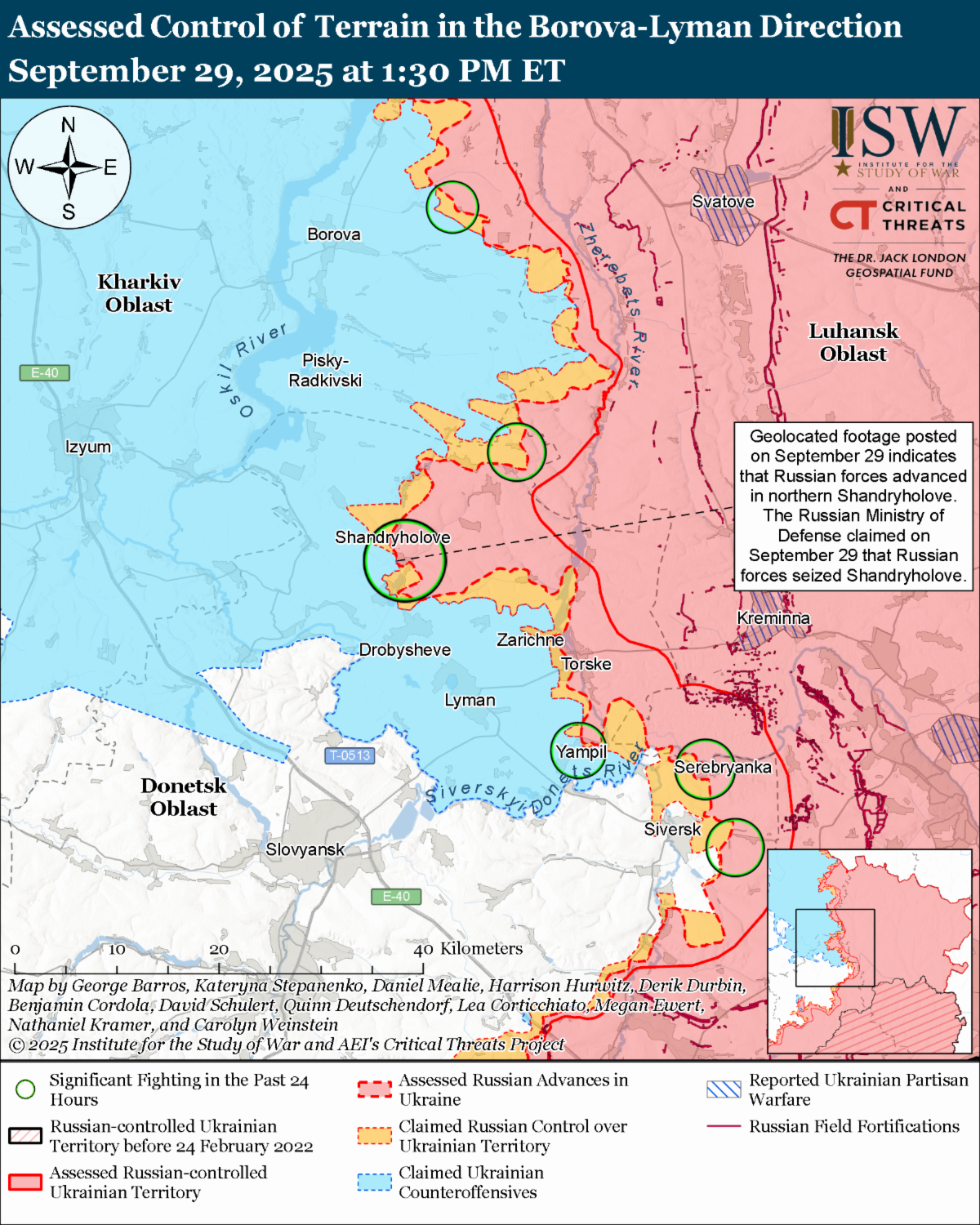
  • 전선 상황: 우크라이나군은 리만 인근과 도브로필랴 전술 구역에서 진격했습니다. 러시아군은 벨리키 부를루크, 리만, 시베르스크, 노보파블리우카, 벨리코미하일리우카 인근과 코스티안티니우카-드루지키우카 전술 구역에서 진격했습니다.

참고: 위의 내용은 제공된 정보에 기반하여 번역되었습니다. 보다 자세한 정보와 최신 동향은 아래 링크를 참조하십시오.

관련 자료 및 최신 동향 (확인된 링크):

“`
**참고:**

* **ISW (Institute for the Study of War):** 전쟁 연구소는 러시아의 군사 작전에 대한 깊이 있는 분석을 제공하는 신뢰할 수 있는 기관입니다.
* **로이터 (Reuters) 및 BBC:** 국제적인 주요 뉴스 매체는 관련 정보를 제공합니다.
* **최신 정보 확인:** 제공된 링크는 예시이며, 실제 최신 정보를 확인하고, 날짜와 내용이 일치하는지 확인해야 합니다.
* **영문 번역:** 본문 내 영어 문구는 필요에 따라 번역되었습니다. (예: “Key Takeaways” -> “핵심 내용 요약”)
* **워드프레스 형식:** HTML 코드는 워드프레스 페이지나 게시물에 직접 붙여넣을 수 있도록 구성되었습니다. (제목, 목록, 링크 등)
* **링크 확인:** 모든 링크는 내용이 관련 정보를 담고 있는지, 정상적으로 작동하는지 꼼꼼히 확인해야 합니다. 만약, 링크가 연결되지 않거나 내용이 일치하지 않는다면, 최신 정보를 찾아서 수정해야 합니다.
* **추가 정보:** 위의 내용 외에도 필요한 경우, 추가적인 최신 정보 (예: 외교 관련 뉴스, 경제 제재 동향 등)를 추가하여 내용을 보강할 수 있습니다.
* **자동 번역 주의:** 자동 번역의 경우, 문맥에 맞지 않거나 어색한 부분이 있을 수 있으므로, 최종적으로는 사람이 직접 검토하여 수정하는 것이 좋습니다.

[원문]

Russian President Vladimir Putin issued the decree to start the semi-annual fall conscription cycle on October 1.

September 29, 2025

Information Cutoff: 8:00 pm ET

Jennie Olmsted, Justin Young, Christina Harward, Daria Novikov, Ian Matthews, and George Barros 

TOPLINES

Russian President Vladimir Putin issued the decree to start the semi-annual fall conscription cycle on October 1. Russia holds two conscription cycles in the spring and fall every year, and Putin signed a decree on September 29 authorizing the Fall 2025 cycle, to conscript 135,000 Russian citizens between October 1 and December 31 for 12 months of mandatory military service outside of the active combat zone in Ukraine. Russia conscripted 134,500 Russians in Spring 2022 and 120,000 in Fall 2022; 147,000 in Spring 2023 and 130,000 in Fall 2023; and 150,000 in Spring 2024 and 133,000 in Fall 2024. The fall cycles have historically conscripted fewer Russians than those in the spring, but the number of conscripts has grown each season since the start of Russia’s full-scale invasion. Deputy Chief of the Main Organizational and Mobilization Directorate of the Russian General Staff Vice Admiral Vladimir Tsimlyansky emphasized on September 22 that the upcoming conscription cycle is not related to the war in Ukraine. Tsimlyansky stated that conscripts will only serve on Russian territory and will not conduct tasks related to the war – meaning conscripts will also not serve in occupied Ukraine that Russia illegally defines as ”Russian territory.” Tsimlyansky stated that the Russian military command will start sending conscripts to assembly points on October 15 and that a third of the conscripts will receive specialized training in training units and at military bases. Russian law prohibits the deployment of conscripts to combat, and Russian forces have typically relied on conscripts for border security, including in Bryansk, Belgorod, and Kursk oblasts. Conscript border guards’ participation in combat during the Ukrainian incursion into Kursk Oblast caused particular discontent in Russian society. 

The Kremlin plans to spend 17 trillion rubles ($183 billion) on national security and defense in 2026 — about 38 percent of its planned annual expenditures. The Russian government submitted to the Russian State Duma on September 29 a draft budget for 2026-2028 that projects federal revenues in 2026 to be roughly 40.3 trillion rubles ($485 billion) and federal expenditures to be roughly 44.1 trillion rubles ($531 billion). The budget calls for 12.9 trillion rubles ($155 billion) to go towards “National Defense” expenditures in 2026 – a decrease from 13.5 trillion rubles ($163 billion) in 2025. The draft budget projects that defense spending will increase to 13.6 trillion rubles ($164 billion) in 2027 and then decrease to 13 trillion rubles ($156.5 billion) in 2028. The 2026 budget also calls for 3.9 trillion rubles ($47 billion) towards “National Security” – an increase from 3.5 trillion rubles ($42 billion) in 2025. Russia plans to commit roughly 38 percent of its expenditures in 2026 to combined “defense” and “security” expenses – a decrease from 41 percent in 2025. The budget allocates 58 billion rubles ($698 million) in 2026 to fund compensation payments and social benefits for servicemembers killed or wounded in action and their family members – a decrease from 78 billion rubles ($939 million) spent in 2025. The budget also allocated roughly 13.9 billion rubles ($167 million) in 2026 to fund the “Defenders of the Fatherland Fund,” which supports Russian veterans and their families – a decrease from the roughly 34.7 billion rubles ($418 million) spent in 2025. Russia is reducing its defense and security spending in 2026 by roughly 200 billion rubles ($2.4 billion) as compared to 2025, despite Russia’s ongoing economic struggles. Russian Finance Minister Anton Siluanov claimed on September 18, for example, that Russian authorities expect the share of Russia’s revenues from oil and gas sales funding the Russian federal budget to be about 20 to 22 percent in 2026, which Siluanov noted is a decrease from about 50 percent previously. The Kremlin recently announced an increase in value-added tax specifically to fund defense and security, which the Russian Finance Ministry estimated will generate about $14.2 billion in additional revenue in 2026.

KEY TAKEAWAYS

  • Russian President Vladimir Putin issued the decree to start the semi-annual fall conscription cycle on October 1.


  • The Kremlin plans to spend 17 trillion rubles ($183 billion) on national security and defense in 2026 — about 38 percent of its planned annual expenditures.

  • The Russian government is planning to increase funding to televised propaganda – in line with increased restrictions on social media and internet access.

  • US Special Envoy to Ukraine General Keith Kellogg acknowledged that Ukraine has US permission to conduct long-range strikes against Russian territory.

  • Kremlin officials are trying to preemptively deter the United States from providing Ukraine with Tomahawk missiles.

  • European officials continue to report unidentified drones operating within NATO airspace.

  • The pro-European Party of Action and Solidarity (PAS) won a parliamentary majority in the September 28 elections in Moldova, as Kremlin-linked Moldovan politicians and Russian officials are preparing to appeal the results and call for protests in the coming days.

  • Ukrainian forces advanced near Lyman and in the Dobropillya tactical area. Russian forces advanced near Velykyi Burluk, Lyman, Siversk, Novopavlivka, and Velykomykhailivka and in the Kostyantynivka-Druzhkivka tactical area.

NEW EMAIL SUBSCRIPTION OPTIONS

ISW has launched newly customizable email subscription options. Existing subscribers have been auto enrolled in all lists. Click below to learn more about these options and customize your preferences.

ISW is powered by the support of individuals like you.

Help us stay independent and impactful.

Website | Jobs | Internships

Follow ISW on social media:

FacebookXYouTube | InstagramLinkedIn | Threads | Bluesky

© 2025, Institute for the Study of War

Donate online or by sending a check to the Institute for the Study of War at 1400 16th Street NW, Suite #515, Washington, DC 20036. Please consider including the Institute for the Study of War in your estate plans.


ISW is a tax-exempt organization under section 501(c)(3) of the Internal Revenue Code. Donations are tax-deductible to the extent permitted by law.

ISW is a non-partisan, non-profit, public policy research organization. ISW advances an informed understanding of military affairs through reliable research, trusted analysis, and innovative education. We are committed to improving the nation’s ability to execute military operations and respond to emerging threats in order to achieve US strategic objectives.

댓글 달기

이메일 주소는 공개되지 않습니다. 필수 필드는 *로 표시됩니다

위로 스크롤