[ISW] 중국 및 대만 업데이트, 2026년 5월 22일

“`html

핵심 내용:

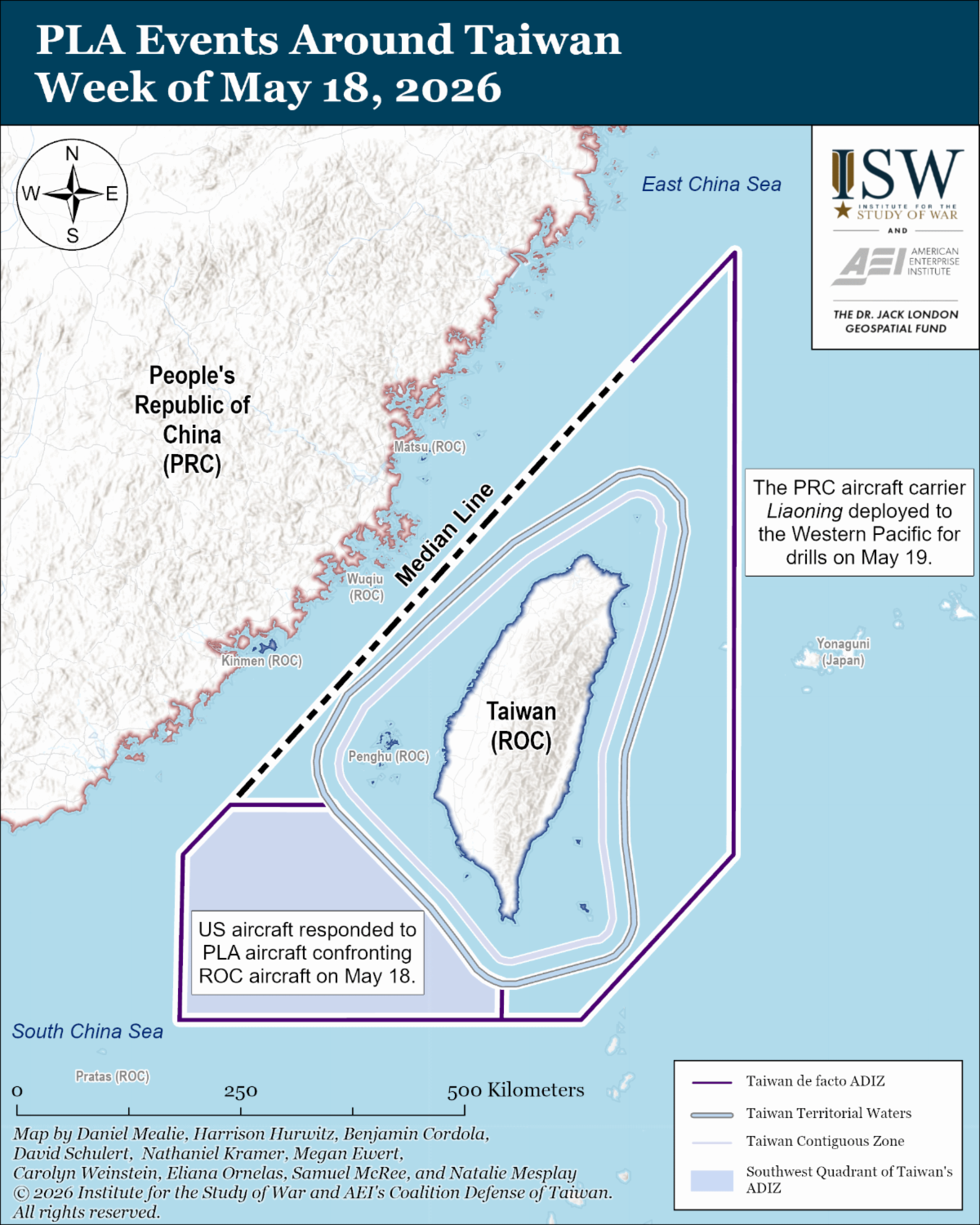
  • 도널드 트럼프 미국 대통령은 대만에 대한 미국의 무기 판매를 고려 중이며, 이는 중화인민공화국(PRC)과의 “협상 카드”로 사용될 수 있다고 시사했습니다. 동시에 대만에게 독립 추구를 자제할 것을 경고했습니다. 미국은 5월 21일, 140억 달러 규모의 대만 무기 판매를 보류한다고 발표했습니다. 중화인민공화국은 미국의 발언과 정책을 이용하여 대만의 미국 지원에 대한 신뢰를 약화시키려 할 가능성이 높습니다.
  • 중국 공산당(CCP) 시진핑 총서기는 5월 20일 블라디미르 푸틴 러시아 대통령과 회담을 가졌습니다. 시 주석과 푸틴 대통령은 지속적인 강력한 양자 관계를 시사했지만, 러시아의 주요 우선 과제인 시베리아의 힘-2 파이프라인에 대한 합의를 이루지 못했습니다.

최신 자료 및 관련 링크:

아래는 위 내용과 관련된 최신 정보 및 추가적인 맥락을 제공하는 자료들입니다:

참고: 위 링크들은 해당 주제에 대한 최신 정보를 제공하지만, 상황은 유동적이므로, 최신 뉴스 기사 및 분석 자료들을 지속적으로 확인하시기 바랍니다. 위의 링크들은 현재 시점에서 내용 확인을 거쳤으며, 대부분 영어로 제공됩니다. 필요에 따라 번역기를 활용하여 내용을 이해할 수 있습니다.

“`

[원문]

US President Donald Trump stated that US arms sales to Taiwan were under consideration and suggested that they could be used as a “negotiating chip”

May 22, 2026

Data Cutoff: May 22, 2026

 Alison O’Neil, Daniel Shats, Karina Wugang, Sam Haendel, and Jakub Kostka of the Institute for the Study of War;

Alexis Turek of the American Enterprise Institute

TOPLINES

US President Donald Trump stated that US arms sales to Taiwan were under consideration and suggested that they could be used as a “negotiating chip” with the PRC while cautioning Taiwan against seeking independence. The PRC could exploit these statements to gain leverage over the United States and decrease Taiwanese faith in the United States. Trump cautioned Taiwan against “seeking independence” and urged Taiwan to “cool down” tensions with the PRC during a May 15 interview. Taiwanese President William Lai Ching-te has maintained that Taiwan does not need to declare formal independence because it already sees itself as a sovereign nation. Taiwan’s Mainland Affairs Council (MAC) reiterated this idea on May 18 and emphasized that Taiwan seeks to maintain the status quo across the Taiwan Strait. The PRC consistently presents Lai and the ruling Democratic Progressive Party (DPP) as “independence activists” that “provoke” PRC aggression.

Taiwanese Presidential Office Spokesperson Karen Kuo stated on May 16 that US law stipulates arms sales to Taiwan. Kuo’s statement referred to the Taiwan Relations Act (TRA), which governs the unofficial diplomatic relationship between Taiwan and the United States. The TRA states that the United States “shall make available to Taiwan such defense articles and defense services in such quantity as may be necessary to enable Taiwan to maintain a sufficient self-defense capacity as determined by the President and the Congress.” The US’s Taiwan policy is also based on an additional “Six Assurances” to Taiwan. One of these Assurances states that the United States has “not agreed to consult with the PRC on arms sales to Taiwan,” placing Trump’s comments in contradiction with the spirit of US policy.  

Acting Secretary of the US Navy Hung Cao stated on May 21 that the United States paused a 14 billion US dollar weapons purchase to Taiwan to ensure sufficient munitions for US operations in the Middle East. Hung’s statement follows reporting that the PRC could be delaying approval of talks with US Under Secretary of Defense for Policy Elbridge Colby. US President Trump stated on May 20 that he would speak with Taiwanese President Lai, which may have influenced the PRC’s actions. No sitting US President has spoken directly with a Taiwanese President since 1979, in keeping with the US policy of “strategic ambiguity” toward Taiwan. The PRC cancelled an earlier set of talks with the United States discussing diplomatic exchanges with Colby over a Taiwan arms sale package announced in December 2025. The PRC makes consistent statements opposing US arms sales to Taiwan and linking these arms sales to “independence” and “separatist” movements, despite Taiwan’s stated policy of maintaining the status quo. Official US statements regarding the pausing of arms sales to Taiwan do not mention the PRC. The PRC will likely seek to use this development to decrease Taiwanese faith in the United States and will likely seek to influence future US arms sales to Taiwan.

KEY TAKEAWAYS

  • US President Donald Trump stated that US arms sales to Taiwan were under consideration and suggested that they could be used as a “negotiating chip” with the PRC while cautioning Taiwan against seeking independence. The United States announced a pause of a 14 billion US dollar arms sale to Taiwan on May 21. The PRC will likely seek to exploit US statements and policy to decrease Taiwanese faith in US support.

  • CCP Secretary General Xi Jinping met with Russian President Vladimir Putin on May 20. Xi and Putin signaled continued strong bilateral relations, but they failed to reach an agreement on the Power of Siberia-2 pipeline, a key priority for Russia.

ISW is powered by the support of individuals like you.

Help us stay independent and impactful.

Website | Jobs | Internships

Follow ISW on social media:

FacebookXYouTube | InstagramLinkedIn | Threads | Bluesky

© 2026 Institute for the Study of War and AEI’s Coalition Defense of Taiwan. All rights reserved.

Donate online or by sending a check to the Institute for the Study of War at 1400 16th Street NW, Suite #515, Washington, DC 20036. Please consider including the Institute for the Study of War in your estate plans.

ISW is a tax-exempt organization under section 501(c)(3) of the Internal Revenue Code. Donations are tax-deductible to the extent permitted by law.

ISW is a non-partisan, non-profit, public policy research organization. ISW advances an informed understanding of military affairs through reliable research, trusted analysis, and innovative education. We are committed to improving the nation’s ability to execute military operations and respond to emerging threats in order to achieve US strategic objectives.

댓글 달기

이메일 주소는 공개되지 않습니다. 필수 필드는 *로 표시됩니다

위로 스크롤