[ISW] 이란 업데이트 특별 보고서, 2026년 4월 6일

“`html

핵심 내용 요약:

다음은 분석의 주요 내용입니다.

  • 이란, 휴전 제안 거부: 이란은 4월 6일, 전쟁 중단 및 호르무즈 해협 재개방을 위한 미국의 휴전 협정을 거부했습니다. 이는 도널드 트럼프 미국 대통령이 제시한 4월 7일 데드라인까지 미국과 이란이 합의에 도달할 가능성을 낮춥니다. 트럼프 대통령은 이란이 합의에 동의하지 않을 경우, 이란 에너지 기반 시설과 교량에 대한 공격 위협을 유지했습니다.
  • 공조된 공격 가능성: 이란, 헤즈볼라, 후티 반군은 4월 6일, 이스라엘을 겨냥한 공격을 공조했을 가능성이 있습니다. 이는 이란의 대규모 공격 능력 제한으로 인한 심리적 효과를 극대화하려는 시도로 보입니다. 헤즈볼라, 이란, 후티 반군이 이스라엘로 발사한 무기의 이동 시간 차이를 고려할 때, 공격 시점이 어느 정도 조율되었을 것으로 추정됩니다.
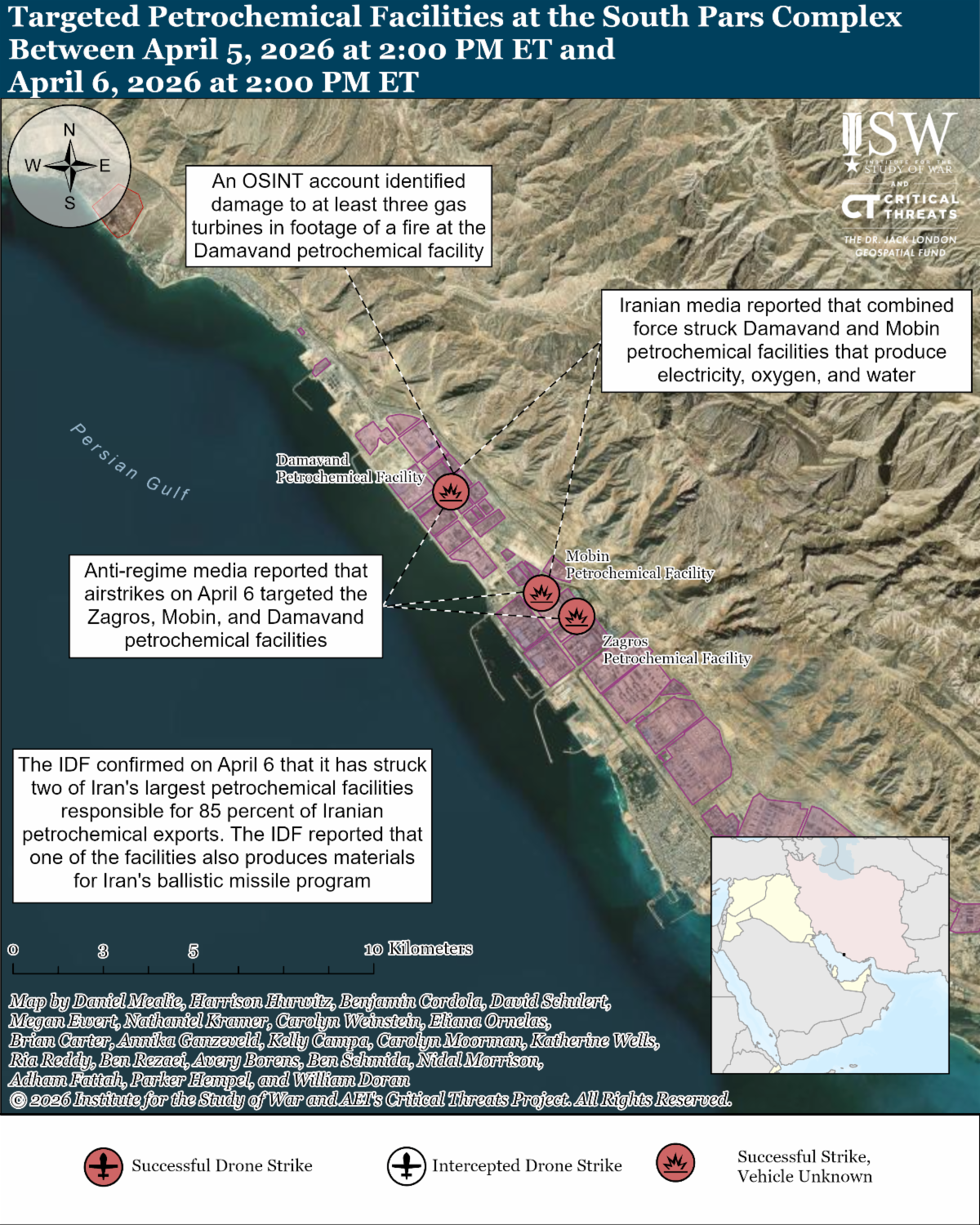
  • 이스라엘의 공격: 이스라엘 방위군(IDF)은 4월 6일, 지난 주 이란의 두 개 대규모 석유화학 시설을 공격했다고 밝혔습니다. 이 시설은 이란 석유화학 수출의 85%를 차지합니다. IDF는 South Pars Complex가 탄도 미사일용 폭발물과 추진제를 생산하는 기반 시설을 갖추고 있다고 보고했습니다.

위 내용은 현재 중동 정세의 주요 흐름을 보여줍니다. 이란과 미국 간의 긴장 고조, 이스라엘을 둘러싼 주변국들의 움직임, 그리고 군사적 충돌의 위험성을 시사합니다.

관련 최신 자료 및 링크:

  1. Council on Foreign Relations – Iran (미국 외교협회 – 이란):

    미국의 외교 정책을 연구하는 싱크탱크인 CFR에서 제공하는 이란 관련 최신 분석 및 자료입니다. 이란의 외교, 경제, 안보 이슈에 대한 깊이 있는 정보를 얻을 수 있습니다. 내용의 갱신이 빠르며, 이란과 관련된 다양한 정보들을 확인할 수 있습니다.
  2. Reuters – Middle East (로이터 통신 – 중동):

    로이터 통신의 중동 관련 뉴스 섹션입니다. 최신 속보, 분석 기사 등을 통해 중동 지역의 긴장 상황과 관련된 정보를 얻을 수 있습니다. 특히 이란-이스라엘 관련 뉴스를 신속하게 파악할 수 있습니다.
  3. Al Jazeera – Iran (알자지라 – 이란):

    알자지라 방송에서 제공하는 이란 관련 뉴스입니다. 중동 지역의 시각에서 이란의 정치, 사회, 경제적 상황에 대한 다양한 정보를 제공합니다. 다각적인 시각을 통해 이란 관련 상황을 이해하는 데 도움이 됩니다.
  4. U.S. Department of State – Iran (미국 국무부 – 이란):

    미국 국무부의 이란 관련 페이지로, 미국의 공식적인 이란 관련 정책 발표 및 성명, 자료 등을 확인할 수 있습니다. 미국의 시각에서 이란을 바라보는 정보를 얻을 수 있습니다.

“`

[원문]

Iran rejected a ceasefire agreement with the United States to pause the war and “reopen” the Strait of Hormuz on April 6.

April 6, 2026

Data Cutoff: 2:00 PM ET

Kelly Campa, Katherine Wells, Adham Fattah, Avery Borens, Nidal Morrison, and Annika Ganzeveld

As the Middle East crisis evolves, ISW urgently needs your support.

Help us stay independent and impactful.

TOPLINES

Iran rejected a ceasefire agreement with the United States to pause the war and “reopen” the Strait of Hormuz on April 6. Iran’s rejection of the latest ceasefire proposal reduces the likelihood that the United States and Iran will reach an agreement by US President Donald Trump’s April 7 deadline. The Pakistani-brokered proposal called for an immediate ceasefire followed by several weeks of negotiations to broker a lasting ceasefire and agreement to reopen the Strait of Hormuz. Iran seeks a permanent end to the war rather than a temporary ceasefire, however. Iranian state media reported that Iran’s counterproposal included 10 demands, including a lasting ceasefire in the “region,” a “protocol for safe passage” through the Strait of Hormuz, support for Iran’s reconstruction, and the lifting of sanctions. Trump rejected Iran’s counterproposal as “not good enough” on April 6. A US official similarly described Iran’s demands as “maximalist” to an Axios journalist on April 6. Iran’s demand for a ceasefire across the “region” presumably refers to a ceasefire that also ends Israel’s campaign against Hezbollah in Lebanon. It is unclear what Iran is referring to when it calls for a “protocol for safe passage” through the Strait of Hormuz, but it may refer to a mechanism that would enable Iran to regulate traffic through the strait. This demand suggests that Iran is using the strait as a point of leverage to attempt to extract concessions and secure a favorable post-war agreement with the United States.

President Trump has maintained his threat to strike Iranian energy infrastructure and bridges if Iran does not agree to a deal by April 7. Trump said in an April 6 White House press conference that the United States has a plan to render every bridge in Iran “decimated” and put every Iranian power plant “out of business” by midnight on April 8 if Iran does not agree to a deal. US officials said that US forces are preparing to strike Iranian energy infrastructure on April 7 if President Trump orders them to do so. US Defense Secretary Pete Hegseth said that the United States would conduct its largest volume of strikes on April 6 since the war began and will conduct even more strikes on April 7.

Iran, Hezbollah, and the Houthis appear to have coordinated an attack targeting Israel on April 6, possibly to try to maximize the psychological effects of Iran’s limited ability to conduct large-scale attacks against Israel. The three attacks triggered Israeli sirens across northern, central, and southern Israel within a roughly ten-minute period and the munitions used in the attacks appeared to reach Israeli airspace around the same time.

KEY TAKEAWAYS

  • Iran rejected a ceasefire agreement with the United States to pause the war and “reopen” the Strait of Hormuz on April 6. Iran’s rejection of the latest ceasefire proposal reduces the likelihood that the United States and Iran will reach an agreement by US President Donald Trump’s April 7 deadline. Trump has maintained his threat to strike Iranian energy infrastructure and bridges if Iran does not agree to a deal by April 7.

  • Iran, Hezbollah, and the Houthis appear to have coordinated an attack targeting Israel on April 6, possibly to try to maximize the psychological effects of Iran’s limited ability to conduct large-scale attacks against Israel. The timing of these attacks suggests that the attacks were coordinated to some degree, given the vastly different travel times of the munitions fired at Israel by Hezbollah, Iran, and the Houthis.

  • The Israel Defense Forces (IDF) confirmed on April 6 that it has struck Iran’s two largest petrochemical facilities in the past week that account for 85 percent of Iranian petrochemical exports. The IDF reported that the South Pars Complex contained infrastructure to produce explosives and propellant for ballistic missiles. 

EMAIL SUBSCRIPTION OPTIONS

ISW offers customizable email subscription options. Click below to learn more and customize your preferences.

Website | Jobs | Internships

Follow ISW on social media:

FacebookXYouTube | InstagramLinkedIn | Threads | Bluesky

© 2026 Institute for the Study of War and AEI’s Critical Threats Project. All rights reserved.

Donate online or by sending a check to the Institute for the Study of War at 1400 16th Street NW, Suite #515, Washington, DC 20036. Please consider including the Institute for the Study of War in your estate plans.

ISW is a tax-exempt organization under section 501(c)(3) of the Internal Revenue Code. Donations are tax-deductible to the extent permitted by law.

ISW is a non-partisan, non-profit, public policy research organization. ISW advances an informed understanding of military affairs through reliable research, trusted analysis, and innovative education. We are committed to improving the nation’s ability to execute military operations and respond to emerging threats in order to achieve US strategic objectives.

댓글 달기

이메일 주소는 공개되지 않습니다. 필수 필드는 *로 표시됩니다

위로 스크롤