[ISW] 이란 업데이트 특별 보고서, 2026년 4월 12일

“`html

핵심 내용 요약

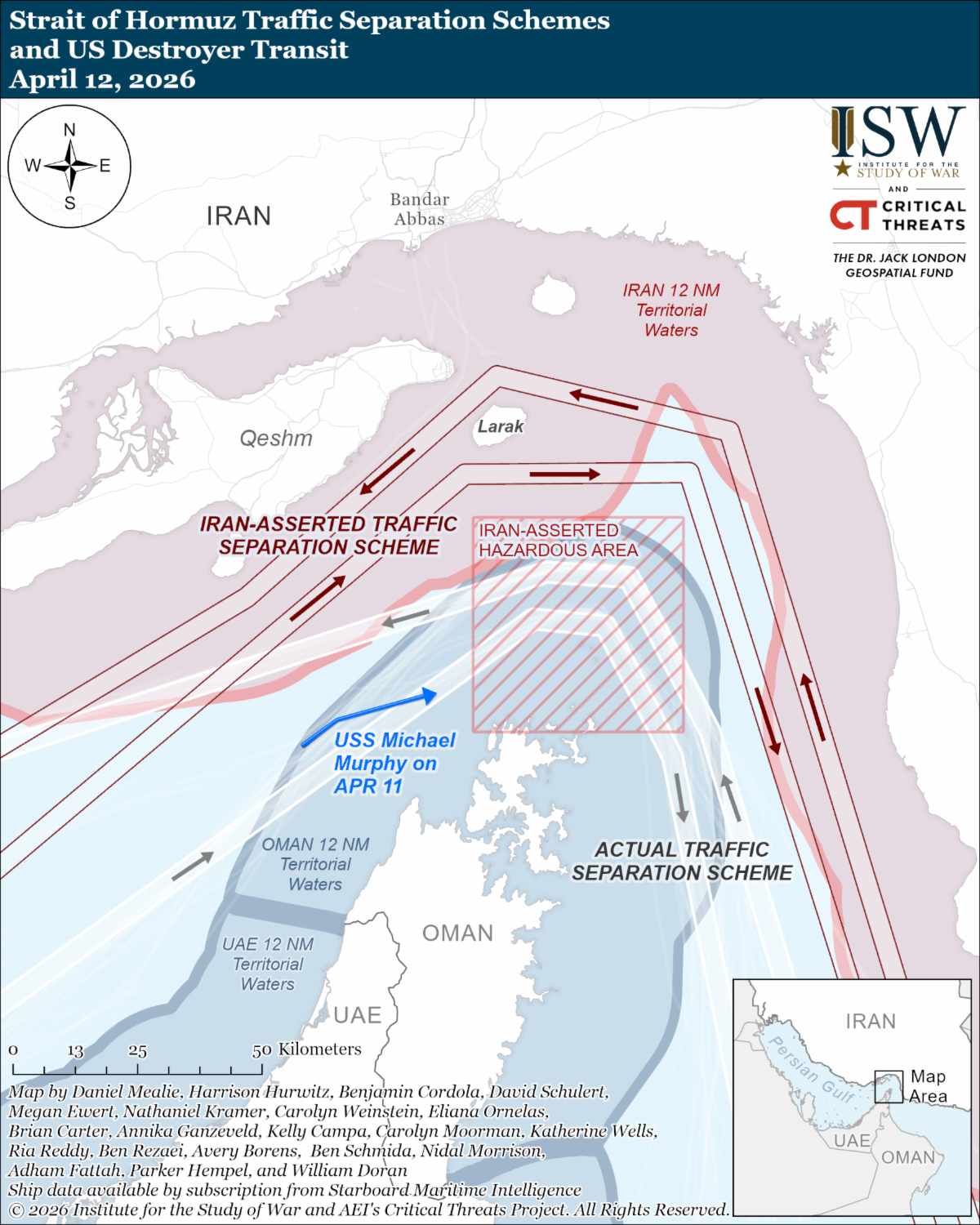
  • 미 해군은 이란 및 이란 승인 선박의 호르무즈 해협 진입 및 통과를 막으려 노력하고 있으며, 이란은 다른 모든 선박의 진입 및 통과를 막고 있습니다. 현재 해협을 통과하는 선박은 이란 및 이란 승인 선박뿐입니다. 이란 영해를 통과하는 선박을 제외하고는 거의 통행이 없는 상황입니다.
  • 미국과 이란은 4월 11일과 12일 파키스탄 이슬라마바드에서 열린 회담에서 합의에 이르지 못했습니다. 도널드 트럼프 미국 대통령은 4월 12일 이란 대표단이 핵 프로그램 관련 양보를 하지 않았지만, 이란이 다시 협상에 나설 것이라고 믿는다고 강조했습니다.
  • 이란은 근본적인 방식으로 미국-이란 관계를 변화시킬 포괄적인 합의를 추구했고, 미국은 호르무즈 해협의 항행의 자유와 이란 핵 프로그램 관련 특정 문제에 집중한 것으로 보입니다. 또한, 이란 대표단 내 다양한 우선순위와 목표를 가진 여러 파벌들이 합의를 더욱 어렵게 만들었을 가능성이 높습니다.
  • ISW-CTP의 마지막 데이터 수집일인 4월 11일 이후, 이란은 걸프 국가들을 겨냥한 어떤 탄약도 발사하지 않았습니다. 4월 8일 휴전 발효 이후, 이란은 걸프 국가들을 겨냥한 미사일과 드론 발사 횟수를 줄였습니다.

참고 자료 및 최신 정보

주의사항: 위에 제시된 링크들은 현재 상황과 관련된 정보를 제공하기 위한 것이며, 정보의 정확성은 각 링크의 출처를 참고하여 확인하시기 바랍니다. 특히, 외교 및 안보 관련 정보는 상황에 따라 변동될 수 있으므로, 최신 정보를 지속적으로 확인하는 것이 중요합니다.

“`

[원문]

The US Navy is attempting to prevent Iranian and Iranian-approved vessels from entering and exiting the Strait, while Iran prevents all other vessels from entering and exiting the Strait.

April 12, 2026

Data Cutoff: 2:00 PM ET

Ben Schmida, Adham Fattah, Nidal Morrison, Will Doran, Kelly Campa, and Brian Carter 

As the Middle East crisis evolves, ISW urgently needs your support.

Help us stay independent and impactful.

TOPLINES

The US Navy is attempting to prevent Iranian and Iranian-approved vessels from entering and exiting the Strait, while Iran prevents all other vessels from entering and exiting the Strait. The only vessels moving through the Strait at this time are Iranian and Iranian-approved vessels. These Iranian-approved vessels are acceding to Iran’s protection racket and using Iran’s unilaterally imposed traffic separation scheme that forces vessels into Iranian territorial waters. Very few ships are transiting the Strait other than the ships moving through Iran’s territorial waters. Only one ship transited the Strait on April 12 and did not use the Iranian-approved shipping lanes by skirting the southern edge of the Iran-declared hazardous area. US President Donald Trump said on April 12 that the US Navy will “interdict every vessel” that has paid Iran for passage and indicated that enforcement of the blockade will begin soon. Iran has used threats of attacks and a limited number of mines to declare a “hazardous area” across the entire Strait of Hormuz except for Iranian territorial waters, where Iran then imposes fees. The US Navy has deployed ships to clear the remaining naval mines and restore freedom of navigation. Some Gulf countries are also supporting mine-clearing efforts, according to Trump. Two US Navy destroyers transited the Strait on April 11 to set conditions for clearing mines in the Strait of Hormuz. The Islamic Revolutionary Guard Corps (IRGC) Navy threatened the destroyers but did not attack them. The IRGC Navy has threatened that any military vessels in the Strait will be subject to a “decisive response.”

The United States and Iran did not reach an agreement during talks in Islamabad, Pakistan, on April 11 and 12. Two Iranian officials speaking to the New York Times on April 12 stated that US-Iran talks failed to reach an agreement over Iran’s stockpile of highly enriched uranium (HEU), Iran’s “control” over the Strait of Hormuz, and Iran’s demand that $27 billion in frozen revenues held abroad be released. The two officials stated that the United States demanded that Iran immediately open the Strait of Hormuz to maritime traffic, but Iran countered that it would only allow unfettered traffic in the Strait after a final peace deal. The lack of a public, mutually agreed-upon document establishing the ceasefire requirements makes adherence to the ceasefire difficult to establish, but US officials said after the two-week ceasefire agreement that the ceasefire required Iran to reopen the Strait. The officials added that the US delegation demanded that Iran “hand over or sell” its entire HEU stockpile, to which Iran made an unspecified counterproposal that the United States did not accept. The officials stated that the US side refused Iran’s requests for war reparations from frozen oil revenue in various countries. US President Donald Trump emphasized on April 12 that Iran’s delegation did not make compromises on its nuclear program, but that he believed Iran would return to negotiations. Iranian Parliament Speaker Mohammad Bagher Ghalibaf, who was the head of the Iranian delegation and has accumulated substantial power within the Iranian system in the last year, blamed the US side for the failure of the negotiations and stated that the United States must “earn” Iran’s trust, however.

KEY TAKEAWAYS

  • The US Navy is attempting to prevent Iranian and Iranian-approved vessels from entering and exiting the Strait, while Iran prevents all other vessels from entering and exiting the Strait. The only vessels moving through the Strait at this time are Iranian and Iranian-approved vessels. Very few ships are transiting the Strait other than the ships moving through Iran’s territorial waters.

  • The United States and Iran did not reach an agreement during talks in Islamabad, Pakistan, on April 11 and 12. US President Donald Trump emphasized on April 12 that Iran’s delegation did not make compromises on its nuclear program, but that he believed Iran would return to negotiations.

  • Iran sought an all-encompassing agreement that would have transformed US-Iran relations in fundamental ways, while the United States appeared focused on specific issues related to freedom of navigation in the Strait of Hormuz and Iran’s nuclear program. The multiple competing Iranian factions with divergent priorities and objectives in negotiations that were part of the Iranian delegation also likely made reaching an agreement exceptionally difficult.


  • Iran has not fired any munitions targeting the Gulf states since ISW-CTP’s last data cut off on April 11. Iranian fired a declining rate of missiles and drones targeting Gulf states since the ceasefire went into effect on April 8.

EMAIL SUBSCRIPTION OPTIONS

ISW offers customizable email subscription options. Click below to learn more and customize your preferences.

Website | Jobs | Internships

Follow ISW on social media:

FacebookXYouTube | InstagramLinkedIn | Threads | Bluesky

© 2026 Institute for the Study of War and AEI’s Critical Threats Project. All rights reserved.

Donate online or by sending a check to the Institute for the Study of War at 1400 16th Street NW, Suite #515, Washington, DC 20036. Please consider including the Institute for the Study of War in your estate plans.

ISW is a tax-exempt organization under section 501(c)(3) of the Internal Revenue Code. Donations are tax-deductible to the extent permitted by law.

ISW is a non-partisan, non-profit, public policy research organization. ISW advances an informed understanding of military affairs through reliable research, trusted analysis, and innovative education. We are committed to improving the nation’s ability to execute military operations and respond to emerging threats in order to achieve US strategic objectives.

댓글 달기

이메일 주소는 공개되지 않습니다. 필수 필드는 *로 표시됩니다

위로 스크롤