[ISW] 이란 업데이트 특별 보고서, 2026년 4월 25일

“`html

핵심 내용:

  • 미국-이란 간 의미 있는 협상 전망은 낮음: 이란 혁명수비대(IRGC) 사령관 아흐마드 바히디 소장과 측근들이 이란 의사 결정 과정을 장악하고 타협을 반대하고 있기 때문입니다. ISW-CTP는 최근 며칠 동안 IRGC가 민간 관료들을 배제했으며, 이란 협상팀은 독립적인 결정을 내릴 권한이 부족하다고 평가했습니다. 이는 지속적인 강경 입장과 실질적인 진전 부재를 설명하는 데 도움이 됩니다.
  • 트럼프 대통령, 파키스탄에서 이란과의 회담 취소: 도널드 트럼프 미국 대통령은 이란의 변화 없는 협상 입장으로 인해 중동 특사 스티브 위트코프와 재러드 쿠슈너의 파키스탄 이슬라마바드 방문을 취소했습니다.
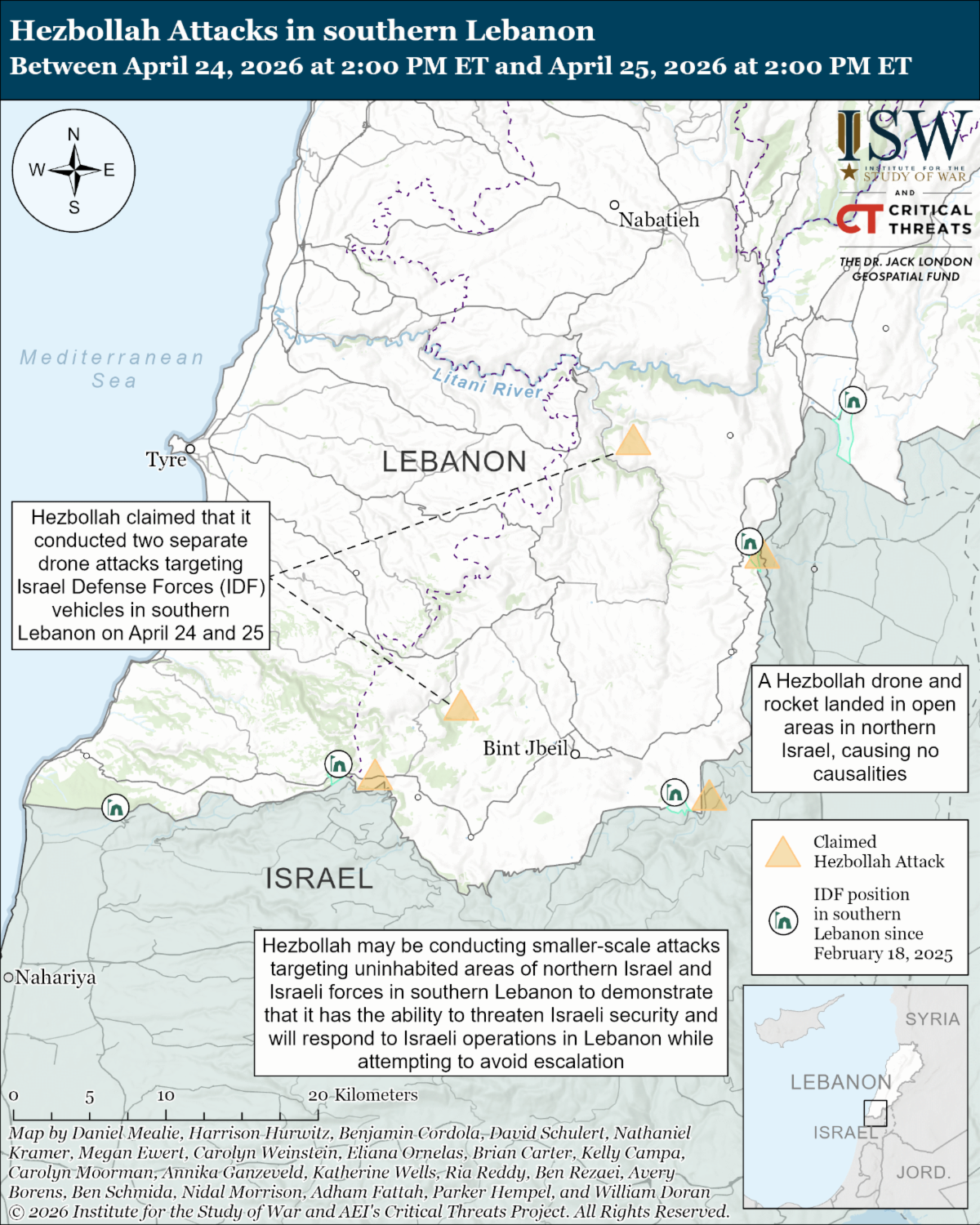
  • 헤즈볼라의 소규모 공격 가능성: 헤즈볼라는 이스라엘 안보를 위협할 능력을 과시하고 레바논 내 이스라엘 작전에 대응하기 위해 이스라엘 북부의 비거주 지역과 남부 레바논의 이스라엘군을 대상으로 소규모 공격을 감행할 수 있습니다. 이 전략은 전쟁 재발의 위험을 감수하지만, 주요 이스라엘 공격을 유발할 수준 이하로 공격을 유지하려는 시도입니다.

참고 자료 및 최신 정보:

  • ISW-CTP 분석:
    ISW (Institute for the Study of War)CTP (Critical Threats Project)는 이란의 활동과 관련된 최신 정보를 지속적으로 제공합니다. 해당 웹사이트에서 이란 관련 보고서를 검색해 최신 분석을 확인할 수 있습니다.
  • 이란 핵 합의 관련 뉴스: 이란 핵 합의(JCPOA) 관련 뉴스, 특히 협상 진행 상황과 관련된 최신 뉴스를 확인하십시오. 주요 뉴스 매체(예: 뉴욕 타임스, BBC, 알자지라)에서 관련 기사를 검색할 수 있습니다.
  • 헤즈볼라 관련 정보: 헤즈볼라의 활동과 관련된 최신 정보는 국제 안보 관련 연구소 (예: CFR (Council on Foreign Relations)) 와 뉴스 매체를 통해 확인할 수 있습니다.
  • 미국-이란 관계 관련 연구: 미국과 이란의 관계에 대한 연구 보고서 및 분석 자료를 검색해 관련 정보를 얻을 수 있습니다. 예를 들어, The Wilson Center와 같은 싱크탱크에서 관련 자료를 찾아볼 수 있습니다.

“`

**주의사항:**

* **링크 확인:** 제공된 링크는 예시이며, 실제 정보를 제공하는 링크는 지속적으로 업데이트되고 변경될 수 있습니다. 제공된 링크가 정확히 해당 내용을 다루는지 직접 확인하는 것이 중요합니다.
* **정보의 정확성:** 분석은 시간이 지남에 따라 변동될 수 있습니다. 최신 정보를 얻기 위해서는 신뢰할 수 있는 소스에서 자료를 확인해야 합니다.
* **번역의 정확성:** 번역된 내용이 원문의 의미를 정확하게 전달하는지 확인하십시오. 필요한 경우, 전문가의 검토를 받는 것이 좋습니다.

[원문]

Prospects for meaningful US-Iran negotiations remain low as Islamic Revolutionary Guards Corps (IRGC) Commander Major General Ahmad Vahidi and his inner circle continue to dominate Iran

April 25, 2026

Data Cutoff: 2:00 PM ET

Kelly Campa, Carolyn Moorman, Parker Hempel, Ben Rezaei, Avery Borens, and Annika Ganzeveld

As the Middle East crisis evolves, ISW urgently needs your support.

Help us stay independent and impactful.

TOPLINES

Prospects for meaningful US-Iran negotiations remain low as Islamic Revolutionary Guards Corps (IRGC) Commander Major General Ahmad Vahidi and his inner circle continue to dominate Iran’s decision-making and oppose compromise. Iranian Foreign Affairs Minister Abbas Araghchi met with senior Pakistani officials in Islamabad, Pakistan, on April 25 to convey Iran’s “observations” on ending the war. Araghchi departed Pakistan after his meetings and arrived in Oman on April 25, according to Iranian media. Iranian Foreign Affairs Ministry Spokesperson Esmail Baghaei stated that no meeting between the United States and Iran was scheduled and that Iran would convey its positions to the United States through Pakistan. A Pakistani journalist, citing unspecified sources, reported on April 25 that Iran will not meet the US delegation and that Iran remains unwilling to engage directly and continues to insist that the United States end its blockade as a precondition for negotiations. This pattern reflects a consistent IRGC-driven negotiating line that includes no flexibility, insistence on maximalist demands, and the use of preconditions to delay or constrain talks. Iranian media reinforced this approach by framing Araghchi’s regional tour as part of a broader strategy to prioritize engagement with mediators and strategic partners, such as Pakistan, Oman, and Russia, rather than an effort at direct negotiations with the United States.

ISW-CTP assessed that in recent days, the IRGC has sidelined civilian officials and that Iran’s negotiating team lacks the authority to make independent decisions, which helps explain continued inflexibility and the absence of tangible progress. The Wall Street Journal similarly reported on April 24 that internal regime infighting, driven in part by figures such as Vahidi and other anti-compromise officials, has made compromise difficult. The report noted that Iranian officials became vague when pressed for specifics during earlier talks in Islamabad, which indicates the lack of a clear and unified negotiating position. The IRGC’s consolidation of control over Iranian decision-making indicates that the Iranian political officials do not have the authority to independently determine Iran’s negotiating position.

US President Donald Trump canceled US Special Envoy to the Middle East Steve Witkoff and Jared Kushner’s planned trip to Islamabad, Pakistan, for talks with Iran, due to Iran’s unchanged negotiating positions. Trump posted on social media on April 25 that he canceled Witkoff and Kushner’s trip to Pakistan because the 18-hour flight would waste time and be “too much work” if the Iranians failed to change their negotiating positions. Trump also said that no one knows who is in charge in Iran, including the Iranians, which has resulted in ”tremendous infighting and confusion.” Trump told Fox News and Axios on April 25 that it did not make sense for him to send Witkoff and Kushner to Pakistan "to sit around talking about nothing." Trump also told Axios that he canceled Witkoff and Kushner’s trip due to Iran’s position on negotiations. Iran appears to be continuing to make maximalist demands (see above). Trump told Axios that his decision not to send Witkoff and Kushner does not mean that he will resume the war with Iran, however. Trump said that if the Iranian leadership wants to talk, then ”all they have to do is call.”

KEY TAKEAWAYS

  • Prospects for meaningful US-Iran negotiations remain low as Islamic Revolutionary Guards Corps (IRGC) Commander Major General Ahmad Vahidi and his inner circle continue to dominate Iran’s decision-making and oppose compromise. ISW-CTP assessed that in recent days, the IRGC has sidelined civilian officials and that Iran’s negotiating team lacks the authority to make independent decisions, which helps explain continued inflexibility and the absence of tangible progress.

  • US President Donald Trump canceled US Special Envoy to the Middle East Steve Witkoff and Jared Kushner’s planned trip to Islamabad, Pakistan, for talks with Iran, due to Iran’s unchanged negotiating positions.


  • Hezbollah may be conducting smaller-scale attacks targeting uninhabited areas of northern Israel and Israeli forces in southern Lebanon to demonstrate that it has the ability to threaten Israeli security and will respond to Israeli operations in Lebanon. This strategy accepts the risk of a return to war, but is still attempting to keep the attacks below a threshold that would trigger major Israeli attacks.

EMAIL SUBSCRIPTION OPTIONS

ISW offers customizable email subscription options. Click below to learn more and customize your preferences.

Website | Jobs | Internships

Follow ISW on social media:

FacebookXYouTube | InstagramLinkedIn | Threads | Bluesky

© 2026 Institute for the Study of War and AEI’s Critical Threats Project. All rights reserved.

Donate online or by sending a check to the Institute for the Study of War at 1400 16th Street NW, Suite #515, Washington, DC 20036. Please consider including the Institute for the Study of War in your estate plans.

ISW is a tax-exempt organization under section 501(c)(3) of the Internal Revenue Code. Donations are tax-deductible to the extent permitted by law.

ISW is a non-partisan, non-profit, public policy research organization. ISW advances an informed understanding of military affairs through reliable research, trusted analysis, and innovative education. We are committed to improving the nation’s ability to execute military operations and respond to emerging threats in order to achieve US strategic objectives.

댓글 달기

이메일 주소는 공개되지 않습니다. 필수 필드는 *로 표시됩니다

위로 스크롤