[ISW] 러시아 공세 작전 평가, 2026년 6월 1일

“`html

핵심 내용 요약:

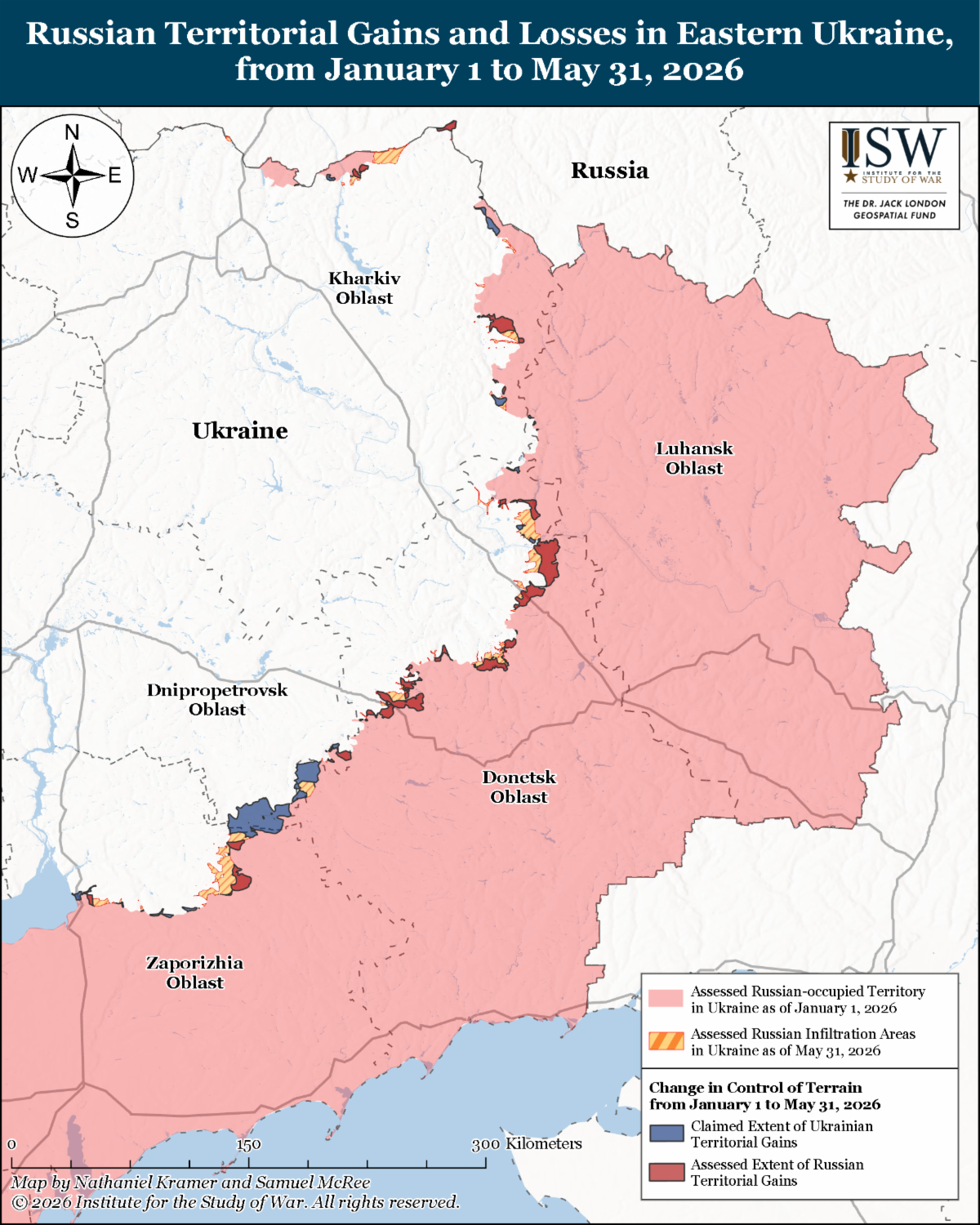
  • 우크라이나군, 러시아의 2026년 봄-여름 공세를 대체로 저지했습니다. 지금까지 러시아군은 2026년 5월에 획득한 영토가 2026년 5월에 점령했던 영토의 극히 일부에 불과합니다.
  • 다른 방법론을 사용하는 다른 출처에서도 2026년 5월 러시아의 진격 속도가 느려지고 있음을 기록하고 있습니다.
  • 러시아의 점령지 감소는 전통적으로 진격을 방해하는 계절적 날씨 변화와 무관하며, 2026년의 더욱 포괄적인 전장 변화의 결과일 가능성이 높습니다.
  • 러시아 대통령 블라디미르 푸틴은 국방비 삭감과 우크라이나 전쟁 중단에 반대하고 있는 것으로 알려졌습니다. 이는 경제 관료들이 그의 전쟁 노력이 러시아 경제에 가하는 지속 불가능한 부담에 대해 경고를 강화했음에도 불구하고 이루어졌습니다.
  • 푸틴이 국방비 삭감과 전쟁 축소를 꺼리는 것은 그가 단기적으로 또는 중장기적으로 전쟁에서 승리할 수 있다고 믿으며, 러시아 경제가 그때까지 버틸 수 있다고 생각한다는 것을 시사합니다.
  • 우크라이나군은 포크롭스크 방향으로 진격했습니다.
  • 러시아군은 하룻밤 사이에 우크라이나를 향해 265대의 장거리 드론을 발사했습니다.

최신 자료 및 관련 링크:

아래는 위 내용과 관련된 최신 자료 및 링크입니다. 각 링크의 내용은 제공된 정보와 관련이 있으며, 최신 정보를 담고 있는지 확인되었습니다.

참고: 위에 제시된 링크는 정보 제공을 위해 제시되었으며, 각 기관의 분석 및 보도 내용은 다를 수 있습니다. 최신 정보를 얻기 위해서는 여러 자료를 참고하고, 비판적인 시각으로 정보를 받아들이는 것이 중요합니다. 특히, 전쟁 관련 정보는 상황 변화에 따라 빠르게 변동될 수 있습니다.

“`

[원문]

Ukrainian forces have largely halted the Russian Spring-Summer 2026 offensive so far, and Russian forces in May 2026 have gained a presence in only a fraction of the territory they did in May 2026.

June 1, 2026

Data Cutoff: 7:15 PM ET

Christina Harward, Samuel Shafiro, Anna Thacker, Grace Mappes, Anjou Kang-Stryker, and Frederick W. Kagan

TOPLINES

Ukrainian forces have largely halted the Russian Spring-Summer 2026 offensive so far, and Russian forces in May 2026 have gained a presence in only a fraction of the territory they did in May 2026. ISW observed evidence to assess that Russian forces gained control of or infiltrated 40.64 square kilometers between December 2025 and May 2026. Russian forces, however, lost 281.1 square kilometers in the same time period when only considering territory that Russian forces control. (ISW’s infiltration layer shows areas in which Russian forces — sometimes very small groups of a few soldiers — have infiltrated and maintain a limited presence interspersed with Ukrainian positions but do not control.) ISW calculations show that Russian forces lost control of about 281 square kilometers in part due to the fact that ISW recodes areas in the Russian advances layer to infiltrations when new evidence allows ISW to reassess the level of control Russian forces maintain over an area. ISW’s calculations that the Russian forces lost control of 281 square kilometers thus do not inherently mean that Ukrainian forces liberated that amount of territory.

Comparisons of Russia’s gains in 2025 with the same period last year show that Russia’s gains have slowed significantly, even when including Russian infiltrations. Russian forces advanced into 515.84 square kilometers from December 2024 to May 2025, compared to the 40.64 square kilometers into which they advanced or infiltrated in the same time period in 2025-2026. Russian forces thus seized or infiltrated into only 7.87 percent as much territory in 2026 as they advanced into in 2025. (Russian forces were not widely using infiltration tactics in early 2025, and ISW therefore did not have a Russian infiltration layer at that time.) Russia’s year-on-year performance statistics significantly worsen when comparing only areas in which ISW assesses that Russian forces exert control: the 515.84 square kilometers they seized in early 2025 compares poorly with the net loss of 281.1 square kilometers they suffered in the same period this year.

Other sources with different methodologies are also recording a slow Russian rate of advance in May 2026. A source reportedly affiliated with Ukrainian military intelligence reported on June 1 that Russian forces occupied only 14 additional square kilometers of territory in May 2026. The source noted, however, that it has delayed publishing information about Ukrainian advances due to security reasons and that Russia’s advances in May were actually negative. The current battlefield situation, in which Ukrainian and Russian positions are often interspersed and the “kill zone” is expanding, makes precise calculations about Russian and Ukrainian gains and losses difficult. ISW’s methodology differs from that of the Ukrainian military intelligence-affiliated source, leading to different calculations about how many square kilometers Russian forces have seized in May. The source’s overall assessment is nonetheless consistent with ISW’s.

KEY TAKEAWAYS

  • Ukrainian forces have largely halted the Russian Spring-Summer 2026 offensive so far, and Russian forces in May 2026 have gained a presence in only a fraction of the territory they did in May 2026.

  • Other sources with different methodologies are also recording a slow Russian rate of advance in May 2026.

  • Russia’s declining gains appear to be unrelated to the seasonal weather shifts that traditionally hinder advances but is likely the result of more comprehensive battlefield shifts in 2026.

  • Russian President Vladimir Putin is reportedly resisting pressure to reduce defense spending and end his war against Ukraine despite increased warnings from economic officials about the unsustainable strain his war effort is putting on the Russian economy.

  • Putin’s unwillingness to cut defense spending and scale down his war effort suggests that Putin believes that he will be able to win the war in the near to medium term and that the Russian economy is able to hold on until then.

  • Ukrainian forces advanced in the Pokrovsk direction.

  • Russian forces launched 265 long-range drones at Ukraine overnight.

ISW takes no US or foreign government funding.

We are powered by the support of individuals like you.

Help us stay independent and impactful.

Website | Jobs | Internships

Follow ISW on social media:

FacebookXYouTube | InstagramLinkedIn | Threads | Bluesky

© 2026 Institute for the Study of War and AEI’s Critical Threats Project. All rights reserved.

Donate online or by sending a check to the Institute for the Study of War at 1400 16th Street NW, Suite #515, Washington, DC 20036. Please consider including the Institute for the Study of War in your estate plans.


ISW is a tax-exempt organization under section 501(c)(3) of the Internal Revenue Code. Donations are tax-deductible to the extent permitted by law.

ISW is a non-partisan, non-profit, public policy research organization. ISW advances an informed understanding of military affairs through reliable research, trusted analysis, and innovative education. We are committed to improving the nation’s ability to execute military operations and respond to emerging threats in order to achieve US strategic objectives.

댓글 달기

이메일 주소는 공개되지 않습니다. 필수 필드는 *로 표시됩니다

위로 스크롤